
Cephalotaxus mannii
Cephalotaxus mannii
Description
Growing requirements
Cephalotaxus mannii, commonly known as Mann's plum yew, is a distinct species of coniferous tree belonging to the Taxaceae family. It is recognized for its ecological value and significant chemical properties.
Native to the mountainous regions of Southeast Asia, including parts of India, China, and Vietnam, this species thrives in humid, shaded subtropical forest environments at elevations between 1000 and 2500 meters.
To cultivate Cephalotaxus mannii successfully, one must replicate its natural habitat requirements. The tree prefers deep, well-drained, nutrient-rich soils and high levels of ambient humidity to ensure optimal physiological growth.
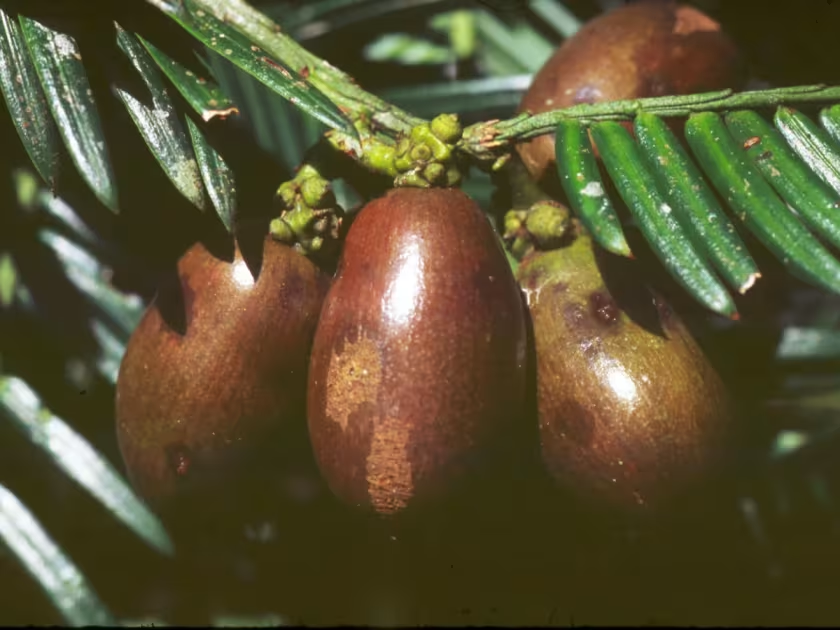
The botanical structure consists of long, flat, needle-like leaves arranged in two ranks. It is a dioecious plant, meaning that separate male and female trees are required for successful seed production, which is a vital consideration for commercial propagation.
Beyond its ornamental value, the species is primarily harvested for the pharmaceutical industry. Its tissues contain harringtonine and homoharringtonine, complex compounds that are essential in the synthesis of modern anti-leukemic medications.
Main diseases and pests
Habitat loss due to deforestation is the most significant threat to the wild populations of Cephalotaxus mannii, leading to its classification as a vulnerable or endangered species in several regions.
In managed cultivation, root rot pathogens like Phytophthora can cause severe damage if irrigation is not carefully controlled. Maintaining proper soil drainage is the most effective preventative measure against such diseases.
Pest pressures often include scale insects and spider mites, which can cause needle chlorosis and stunted growth. Integrated pest management (IPM) strategies are recommended to mitigate these risks without harming the plant's delicate tissues.
Sensitivity to extreme temperature fluctuations can weaken the trees, making them more susceptible to opportunistic infections. Protection from wind and excessive direct solar radiation is necessary for young specimens.
Competition from aggressive invasive weeds can severely impede the growth of seedlings. Regular manual weeding and mulching are standard maintenance practices to ensure the young trees receive adequate nutrients and light.