
Griffith's plum yew
Cephalotaxus griffithii
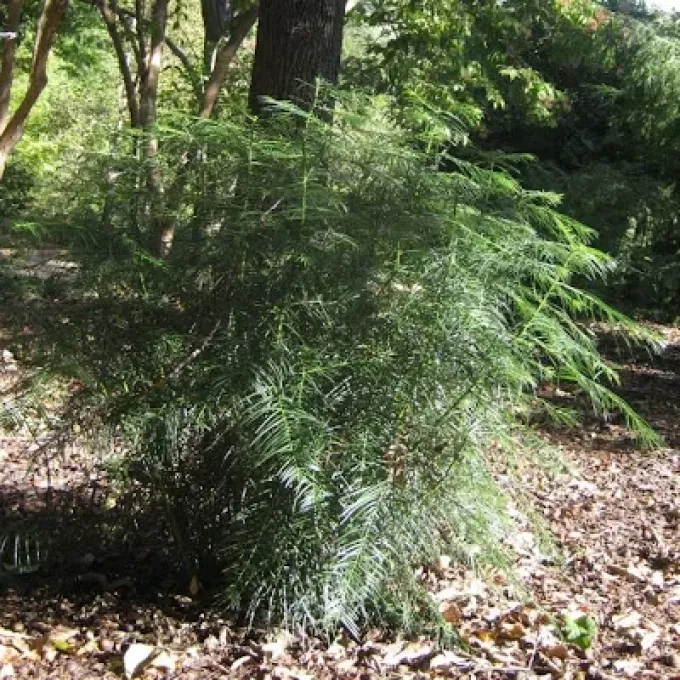
Description
Growing requirements
Griffith's plum yew (Cephalotaxus griffithii) is an evergreen coniferous shrub or small tree belonging to the Cephalotaxaceae family. Native to the mountainous regions of India, Myanmar, and China, it is well-adapted to high-altitude temperate climates.
The plant thrives in partial to deep shade, making it a perfect selection for forest-like garden environments. It typically requires high atmospheric humidity and protection from harsh, dry winds that can cause browning of the needles.
Cultivation requires well-drained, nutrient-rich soil with an acidic to neutral pH profile. Waterlogged conditions are detrimental to the root system, so sandy or loamy soil types with integrated drainage are highly recommended for optimal development.
Agrotechnical management involves regular moisture monitoring and seasonal application of slow-release fertilizers. Mulching is critical to protect shallow roots from extreme temperature fluctuations and to maintain consistent moisture levels during the growing season.
The species serves primarily as an ornamental specimen in botanical gardens and shaded landscape designs. Its unique biological structure and slow growth rate contribute to its status as a highly sought-after plant for specialized horticultural collections.
Main diseases and pests
Root rot and Phytophthora infections are the most significant threats to the long-term health of this plant. These are primarily caused by poor drainage and excessive irrigation, necessitating careful water management and fungicide application when symptoms appear.
Pest issues include infestations of scale insects and spider mites, which often occur in drier environments or during drought periods. Implementing integrated pest management, such as maintaining correct humidity and using soft acaricides, helps maintain foliage quality.