
Dune sandbur
Cenchrus tribuloides L.
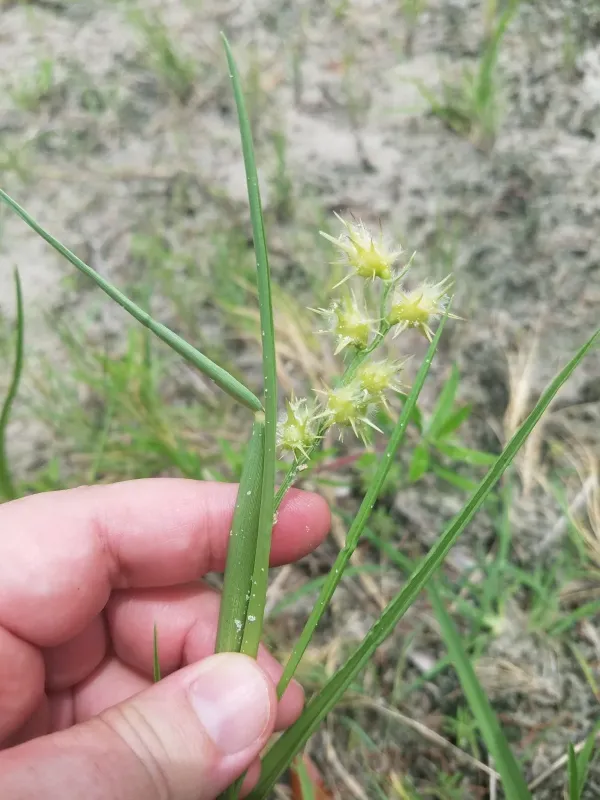
Description
Growing requirements
Dune sandbur is an annual grassy weed belonging to the Poaceae family. It is recognized as a significant agricultural pest due to its invasive nature and destructive potential in cultivated lands.
Native to the Americas, this plant has spread globally, thriving in sandy soils, disturbed sites, and coastal areas. It is highly adapted to arid environments where other vegetation often fails to thrive.
The plant grows best under warm, sunny conditions and requires minimal moisture to complete its life cycle. Germination typically occurs when soil temperatures rise consistently during the late spring and summer months.
Botanically, it is characterized by spiked burrs that easily attach to clothing, equipment, and animal fur. This specialized seed dispersal mechanism allows the weed to colonize new territories rapidly and persist in difficult environments.
Agricultural management requires a proactive approach, including manual removal of isolated patches, the use of pre-emergent herbicides, and maintaining healthy, dense crop canopies that shade the soil surface to prevent germination.
Main diseases and pests
The primary threat posed by Dune sandbur is the damage caused by its sharp, spiny burrs. These burs can cause painful physical injuries to livestock, often infecting wounds and damaging hides or wool.
In crop production, it acts as a severe competitor for resources such as nitrogen and soil moisture, which can significantly reduce yield quality and quantity in row crops and cereal grains.
The weed is notorious for its ability to persist in the soil seed bank for several years. This makes long-term eradication extremely difficult once an area becomes heavily infested.
Because the plant possesses few natural predators, it can dominate ecological niches. Traditional cultivation practices alone are often insufficient, necessitating integrated weed management strategies.
Farmers must be vigilant in preventing the transport of contaminated soil or machinery from infested areas to ensure the weed does not spread to previously clean agricultural land.