
Cenchrus pedicellatus
Cenchrus pedicellatus (Trin.) Morrone
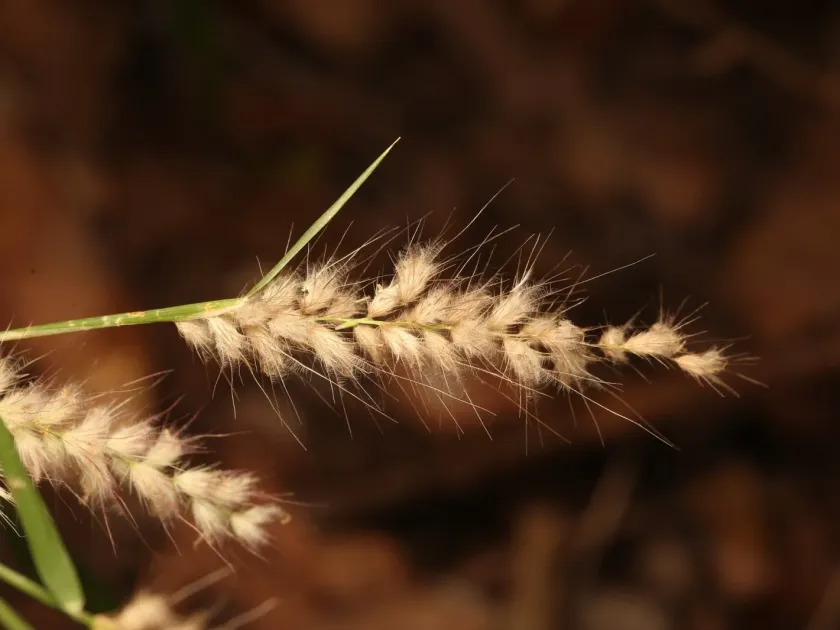
Description
Sowing dates
Cenchrus pedicellatus is a robust perennial grass belonging to the Poaceae family. In tropical and subtropical regions, sowing is typically initiated at the beginning of the rainy season to ensure sufficient soil moisture for successful germination.
The ideal temperature range for seed germination is between 20 and 30 degrees Celsius. Due to natural seed dormancy, pre-sowing treatments are often recommended to achieve uniform emergence.
Seeding rates generally range from 2 to 5 kilograms per hectare, depending on the planting method. Seeds should be sown at a shallow depth of 1-2 centimeters to ensure they do not exhaust their reserves before reaching the surface.
Post-sowing soil compaction is crucial to facilitate proper seed-to-soil contact, which significantly improves seedling vigor and survival rates.
The plant establishes itself quickly, developing a hardy root system that allows it to compete effectively against weed species in its early growth stages.
Growing requirements
This species is highly adapted to arid and semi-arid environments, exhibiting superior drought tolerance compared to many other forage grass varieties.
Cenchrus pedicellatus thrives in light, well-drained sandy or loamy soils. It demonstrates remarkable resilience when grown on low-fertility soils where more demanding crops would fail.
The plant requires full sun exposure for optimal photosynthetic activity. Shaded conditions lead to reduced tiller density and thinner stem development.
Waterlogging and poor drainage are detrimental to the plant. Therefore, sites must be chosen with adequate natural slope or drainage capabilities to prevent root rot.
While the grass is known for its hardiness, the strategic application of nitrogen fertilizers can drastically improve total biomass production and overall forage nutritional quality.
Yield
The biomass yield of Cenchrus pedicellatus is closely tied to moisture availability and soil nutrient management. The plant is capable of multiple cuts per season under favorable rainfall patterns.
Its ability to recover quickly after defoliation makes it an excellent choice for intensive grazing systems when managed correctly.
Dry matter yields typically range from 5 to 12 tons per hectare annually, depending on the level of input and local climatic constraints.
The grass provides a valuable source of roughage, although the quality is highest when the plant is harvested before reaching full maturity.
- High regenerative capacity after cutting or grazing.
- Efficient nutrient uptake mechanisms.
- Excellent persistence under variable environmental conditions.
Main diseases and pests
Cenchrus pedicellatus is naturally resistant to many common pests that plague other graminoid crops, which reduces the need for chemical intervention.
Fungal pathogens, particularly rust diseases, can occur during periods of high humidity and poor air circulation within the dense crop canopy.
Insect pests, such as various species of cutworms, may occasionally feed on seed heads, which can pose a challenge specifically in seed production fields.
Improper grazing management, such as overstocking, can weaken the stand and potentially allow invasive weed species to infiltrate the pasture.
Monitoring for signs of stress or pathogen presence is recommended to ensure the longevity and health of the stand throughout the production cycle.
Harvesting
For high-quality hay production, harvesting should be performed at the boot stage or at the very beginning of the flowering phase to maximize nutritional value.
In grazing applications, controlled rotation is essential to prevent the stems from becoming too fibrous, which would otherwise decrease livestock palatability.
Seed harvesting should be timed when the seed heads begin to change color, as they are prone to shattering if left on the stalk for too long.
The grass dries relatively quickly post-harvest, which simplifies the curing process and reduces the risk of quality loss during the hay-making phase.
Consistent and timely management during the harvest phase is key to ensuring the stand remains productive for many years of agricultural use.