
Long-spine sandbur
Cenchrus longispinus (Hack.) Fernald
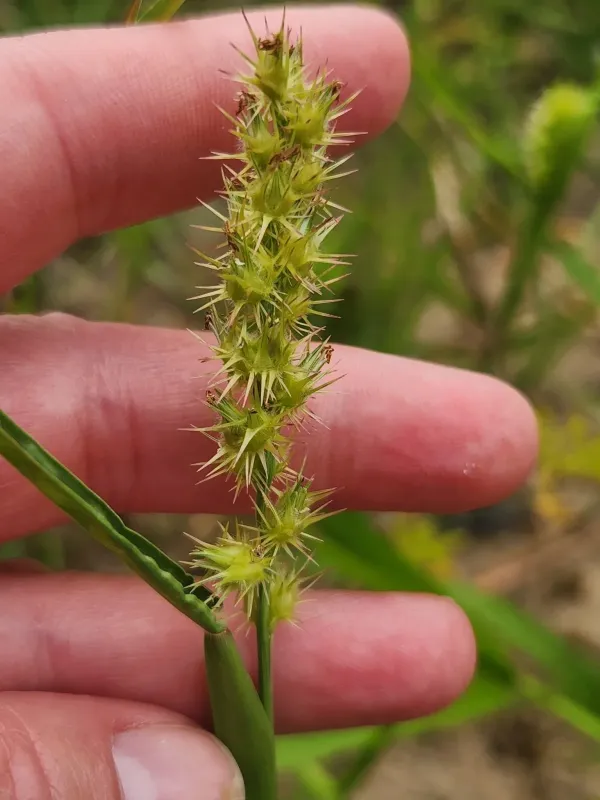
Description
Growing requirements
Long-spine sandbur is an annual grass species belonging to the Poaceae family. Originating from North America, it has become a widespread invasive weed in many agricultural regions, known for its persistent and difficult-to-control nature.
The plant thrives in sandy or light-textured soils but can establish itself in various conditions. It is highly drought-tolerant and requires substantial sunlight, which allows it to dominate in open field environments and disturbed land.
The primary botanical feature of the species is its spiny burrs, which encase the seeds. These sharp structures make the plant problematic for livestock, as they can cause injury to mouth tissues, skin, and fleece, significantly reducing the market value of wool.
Seed germination typically occurs in late spring when soil temperatures reach the appropriate threshold. The plant grows rapidly, utilizing resources efficiently to outcompete standard crops for water and nutrients.
In terms of agricultural impact, long-spine sandbur is strictly a weed with no commercial value. It poses a significant threat to yields and complicates harvesting operations, particularly in dryland farming systems and pastures.
Main diseases and pests
There are no significant diseases that naturally suppress long-spine sandbur populations in agricultural fields, due to its high level of hardiness and adaptation to various environmental stressors.
The plant can harbor various plant pathogens, acting as an alternative host that can bridge infections to cultivated crops. This poses a constant risk of disease outbreak in neighboring field areas.
Pest populations rarely find this plant suitable for development, which further aids its rapid spread. Without natural biological controls, the weed requires intensive human intervention to be managed effectively.
Integrated weed management, including mechanical cultivation and targeted herbicide applications, remains the standard recommendation for containing infestations on farms.
Preventive measures focus on cleaning machinery that moves between infested and clean areas to ensure that the spiny burrs are not transported, as they are highly effective hitchhikers.