
Cenchrus incertus
Cenchrus incertus M. A. Curtis
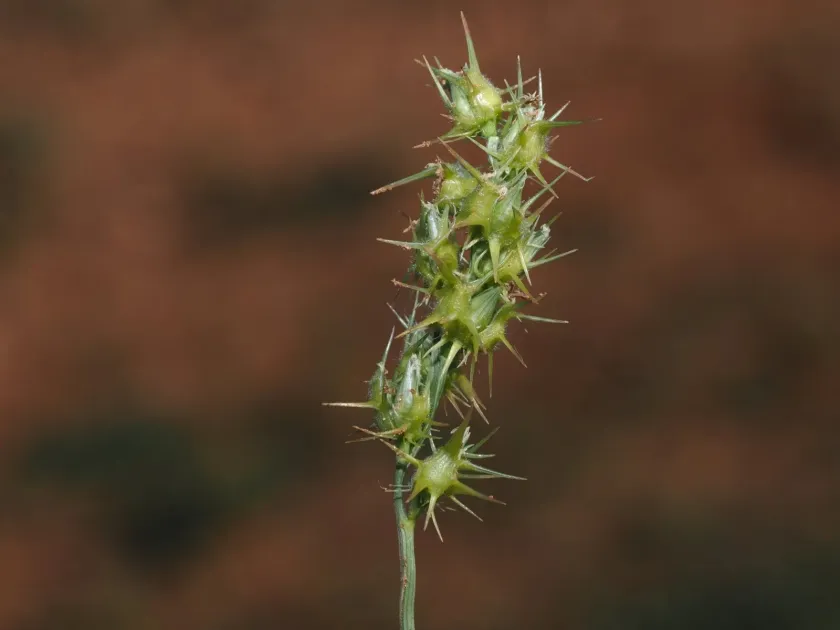
Description
Growing requirements
Cenchrus incertus, commonly known as the southern sandbur or coast sandbur, is a summer annual grass species belonging to the Poaceae family. It is recognized as a significant agricultural weed known for its hardy nature and aggressive colonizing ability in diverse climates.
Native to the Americas, this species has spread extensively across tropical and warm temperate zones worldwide. It thrives primarily in sandy and loamy soils, making it a common sight in pastures, cultivated fields, and disturbed urban areas where competition from other vegetation is low.
The botanical structure of the plant features stems that grow in clumps or mats. Its most distinctive characteristic is the bur-like inflorescence, composed of sharp, spine-covered involucres that encapsulate the seeds. This adaptation ensures effective dispersal via animals and machinery.
The plant demonstrates remarkable tolerance to heat and drought. It is highly efficient in water and nutrient uptake, which allows it to outcompete standard crops in environments where moisture may be limiting, thereby posing a threat to agricultural productivity.
Culturally, managing Cenchrus incertus requires a focus on soil management and crop rotation. Maintaining a vigorous, dense crop canopy is one of the most effective ways to shade out seedlings and prevent the plant from establishing its invasive root systems early in the season.
Main diseases and pests
The primary concern regarding this species is its impact on both plant health and livestock. In grazing systems, the spiny burs cause physical damage to the mouths, tongues, and intestinal tracts of animals, leading to weight loss and susceptibility to secondary infections.
In crop production, Cenchrus incertus significantly reduces yields by competing for critical resources. Its presence is especially problematic in rows of vegetables or forage crops, where it can quickly become dominant if not managed proactively.
Chemical control remains a staple in managing this species, often involving pre-emergent and post-emergent herbicide applications. Timing is critical; applications must occur before the burs form and mature to prevent the addition of new seeds to the soil profile.
Strict sanitation protocols for farm equipment are essential. Because the burs are easily transported via mud and debris on tires and tractors, cleaning machinery when moving between infested and clean zones is a mandatory step in containing the spread.
Integrated weed management (IWM) programs that combine mechanical cultivation, chemical intervention, and the promotion of competitive crop varieties offer the best results. Long-term monitoring is necessary due to the extended viability of the seeds in the soil.