
Southern sandbur
Cenchrus echinatus L.
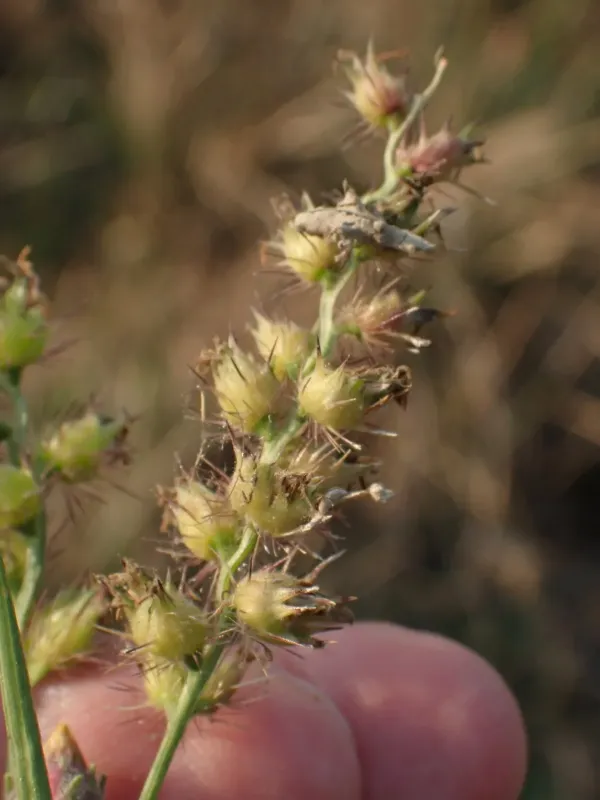
Description
Sowing dates
The germination of Cenchrus echinatus seeds typically begins when soil temperatures consistently reach 15°C or higher in the late spring.
Seedlings emerge in flushes throughout the growing season, which poses a significant challenge for pre-emergence herbicide applications.
Farmers must monitor fields closely during the early stages of the crop cycle to detect and manage new flushes of the weed.
Mechanical cultivation remains an essential practice, especially when the soil is warm and the weed seedlings are small and vulnerable.
Due to the dormant nature of the seeds, long-term soil management is necessary to exhaust the seed bank over several cropping seasons.
Growing requirements
Southern sandbur is a member of the Poaceae family, widely adapted to sandy, well-drained soils and high-temperature environments.
It thrives in open areas with high solar radiation, making it a common nuisance in disturbed land and neglected pastures.
The plant demonstrates remarkable drought tolerance, allowing it to survive in conditions where typical crops might suffer moisture stress.
While it prefers sandy soil, it can establish in various soil types provided there is sufficient light and minimal canopy competition.
Optimal growth occurs during the hottest months, leading to rapid development of the characteristic bur-like inflorescences.
Main diseases and pests
The primary threat of this plant is its sharp, spiny burs that cause physical injury to livestock and contaminate agricultural harvests.
It serves as a reservoir for various plant viruses and pathogens, facilitating the spread of disease within agricultural fields.
The plant is highly competitive for nutrients and water, often leading to reduced vigor and yield in affected cash crops.
Its ability to propagate rapidly via wind and animal dispersal makes it a persistent invasive species in many agricultural regions.
- Monitor field margins for early colonization.
- Clean machinery after harvesting in infested areas.
- Use selective herbicides to suppress growth.
- Maintain dense crop stands to limit light availability for germination.