
Cecropia tessmannii
Cecropia tessmannii
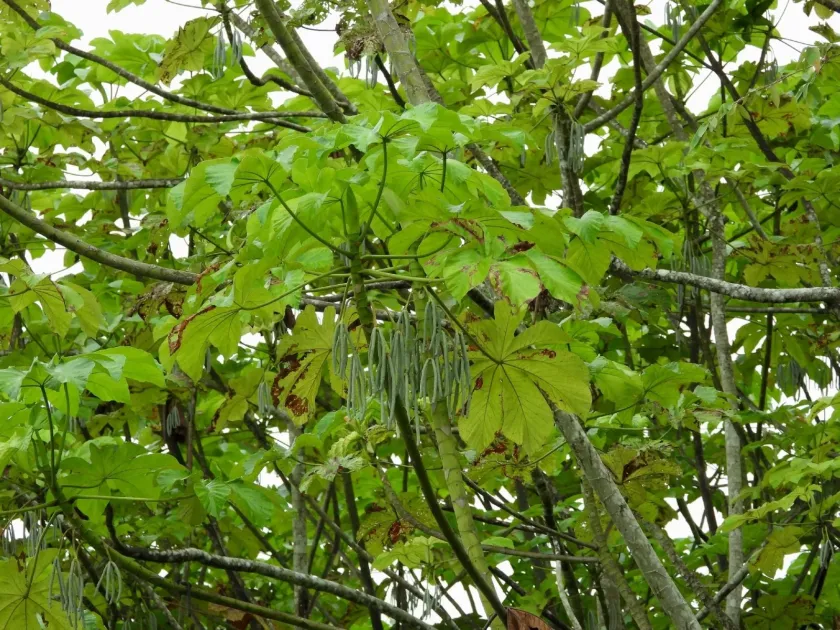
Description
Growing requirements
Cecropia tessmannii is a prominent species within the Urticaceae family. It is a fast-growing pioneer tree native to the tropical rainforests of the Amazon basin.
This species thrives in environments with high solar radiation, making it a critical component of secondary forests and cleared land rehabilitation projects.
Ideal cultivation conditions involve consistent tropical temperatures and high annual rainfall, as the tree is highly sensitive to prolonged cold or arid conditions.
Soil requirements dictate the need for well-drained, nutrient-rich substrates; however, its pioneer nature allows it to colonize disturbed soils effectively if drainage is adequate.
Proper agronomic management includes selecting sites that mimic its natural clearing habitat, ensuring no competition from denser canopy species during the early growth phases.
Harvesting
The wood of Cecropia tessmannii is valued for its lightweight properties, making it an excellent raw material for pulp, paper production, and lightweight construction panels.
Its fibrous bark has historical and modern utility in cordage manufacturing, providing a sustainable alternative for natural fiber industries.
The ecological impact of this tree is significant, as it provides essential food resources for tropical fauna and contributes to the rapid restoration of soil nitrogen levels.
Sustainable harvesting methods focus on short-rotation cropping systems that allow the plant to regenerate from stumps, ensuring long-term yield without soil degradation.
Ongoing research is expanding the potential applications for this species, particularly in the extraction of bioactive secondary metabolites for pharmaceutical purposes.