
Cecropia hololeuca
Cecropia hololeuca
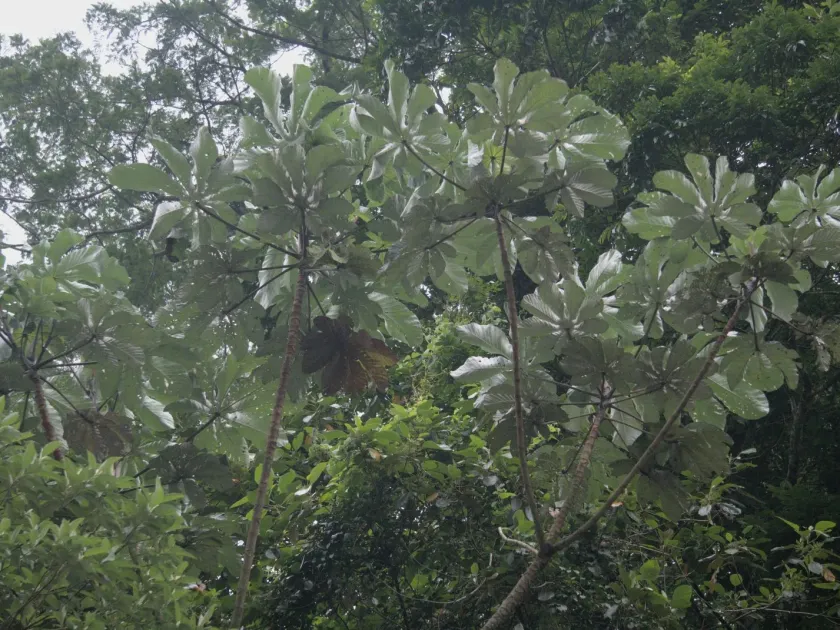
Description
Sowing dates
Cecropia hololeuca is a fast-growing tropical tree, recognized as a pioneer species essential for forest regeneration. In its natural habitat, seeds are distributed by birds and mammals, finding their way into open, well-lit forest gaps where sunlight is abundant for germination.
In an agricultural setting, propagation is typically achieved through seeds. Planting should be done in loose, organic-rich soil, maintaining a stable temperature range of 24–28 degrees Celsius, which is crucial for successful seedling emergence in this species.
For optimal results, soaking seeds in warm water for 24 hours prior to planting is highly recommended. Consistent soil moisture must be maintained throughout the germination phase, as the seeds are extremely sensitive to drought and will lose viability if the substrate dries out prematurely.
Once seedlings develop their second pair of true leaves, they should be transplanted into individual containers. Agronomists emphasize the importance of gradual acclimation to direct sunlight, as these trees are highly photophilic and require significant light intensity from a young age.
When transplanting into the field, select sites protected from strong winds that might damage the young, brittle branches. Spacing should be approximately 4–6 meters between trees to ensure proper air circulation and to provide sufficient space for rapid canopy expansion.
Growing requirements
Cecropia hololeuca belongs to the Urticaceae family and is native to the tropical regions of South America, particularly Brazil. The species thrives in well-drained, fertile soils with a pH ranging from slightly acidic to neutral, requiring high organic content for optimal development.
The climate requirements are strictly tropical, necessitating year-round warmth with no tolerance for frost or freezing temperatures. An annual rainfall of 1500–2500 mm is ideal for sustained growth, as the tree exhibits high physiological water demand during its peak growing seasons.
Soil drainage is a critical factor; while the plant requires consistent moisture, standing water in the root zone can rapidly lead to root rot. Careful management of drainage systems is essential to balance the need for water availability with the risk of anaerobic soil conditions.
As a highly light-demanding species, Cecropia requires full sun to achieve its maximum biomass production. Adequate light exposure is not only vital for photosynthesis but also for the structural integrity of the wood, which can become weak and spindly under insufficient light levels.
For professional agronomic management, regular fertilization with nitrogen and potassium-rich organic fertilizers is recommended. Applying nutrients in the spring encourages vigorous growth and enhances the tree's resilience against environmental stress factors in tropical climates.
Yield
The economic value of Cecropia hololeuca is derived primarily from its rapid wood production and the medicinal potential of its leaves. High biomass accumulation rates make this an attractive crop for forestry projects aimed at short-rotation timber production in tropical areas.
Leaf harvesting can be performed year-round as the foliage matures. Manual collection, if performed with care, allows for multiple harvests in a single season, as the tree possesses a remarkable ability to regenerate its vegetative parts quickly after selective pruning.
The wood of this species is lightweight, porous, and easy to process, making it highly suitable for the paper, plywood, and lightweight construction industries. Managed plantations can reach technical maturity for harvesting in as little as 7–10 years after initial planting.
In agroecological systems, the tree is frequently used for fast-canopy formation, which aids in soil stabilization and the restoration of local biodiversity. The fruit, though secondary in commercial terms, serves as a vital food source for local wildlife, enhancing the ecosystem service value.
Current economic strategies involve integrating timber harvesting with the extraction of bioactive compounds from the leaves. Ongoing research aims to optimize harvesting cycles to maximize the yield of both raw materials while maintaining the long-term health and productivity of the plantation.
Main diseases and pests
Major threats include pests such as Azteca ants, which often live in symbiosis with the tree; however, excessive populations can cause significant damage to young shoots. Aphids and spider mites are also common issues, especially when the trees are grown under dry air conditions.
Fungal diseases are the primary cause of mortality in humid conditions, with root rot being the most dangerous. This condition often results from inadequate drainage or excessive soil water, which creates a favorable environment for pathogenic fungi to colonize the root system.
Leaf spot caused by Cercospora fungi can significantly reduce photosynthetic efficiency, leading to a noticeable decline in growth rates. Maintaining proper spacing between trees to ensure adequate airflow is the most effective preventative measure against the spread of such fungal pathogens.
Insects that bore into the bark can act as vectors for viral infections, making regular health monitoring of the plantation a top priority. When infestations are detected, the use of biological control agents is preferred to minimize negative impacts on the plantation's overall health.
Sanitary pruning is an essential maintenance practice, as it involves the removal of dead or diseased branches to prevent the buildup of fungal spores. Ensuring that all plant debris is cleared from the site significantly reduces the inoculum potential and protects neighboring trees.
Harvesting
Harvesting leaves from Cecropia hololeuca requires selective practices, focusing only on fully expanded, undamaged blades. Proper technique is essential to avoid harming the main stems and branch nodes, which are critical for the plant's sustained growth and vigor following pruning.
Timber harvesting should follow established management plans that account for the age of the stand and the intended end-use of the wood. The quality of the timber is highly dependent on timing the harvest correctly and performing primary processing immediately after felling.
Freshly harvested wood must be dried quickly to prevent the growth of mold, which is common due to the high moisture content of the wood. Natural ventilation in shaded, dry areas is typically used to achieve the desired moisture reduction without damaging the wood fibers.
Leaf material destined for pharmaceutical use must be dried under controlled temperature conditions to preserve the integrity of the bioactive compounds. It is vital to shield the drying foliage from direct sunlight, which could trigger the degradation of sensitive medicinal ingredients.
Efficient harvest organization minimizes mechanical damage to the tree, ensuring its capacity for rapid recovery and enabling repeated yields over many years. Utilizing professional tools and techniques increases the overall profitability and sustainability of the plantation management program.