
Cattleya violacea
Cattleya violacea
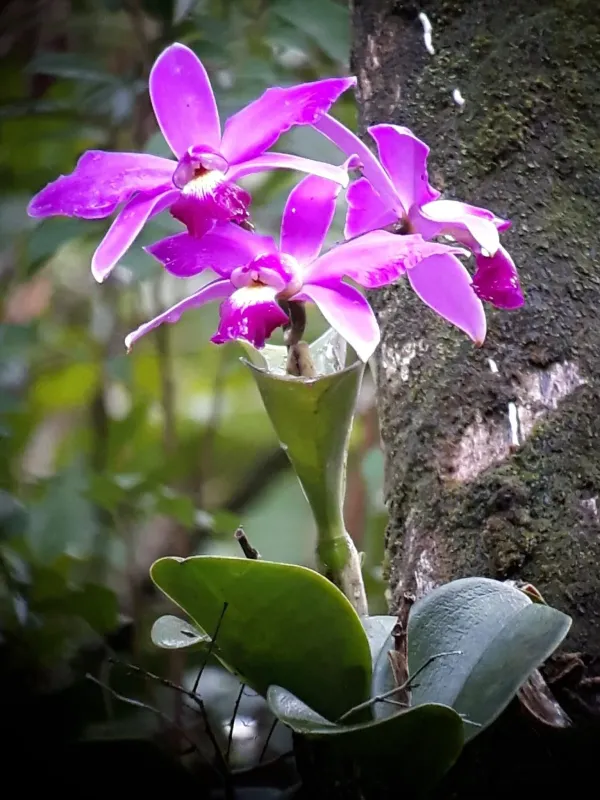
Description
Growing requirements
Cattleya violacea belongs to the Orchidaceae family and is highly regarded for its vibrant, fragrant flowers. As a sympodial epiphyte, this species is native to the river basins of the Amazon and Orinoco in South America, where it thrives in humid and consistently warm conditions.
The botanical structure of this orchid includes robust pseudobulbs that store energy and water, allowing the plant to survive periods of fluctuating rainfall. Cultivation requires bright, indirect sunlight to encourage strong growth and subsequent flowering, which typically occurs on mature pseudobulbs.
Temperature management is critical for the healthy development of Cattleya violacea. The ideal environment requires daytime temperatures between 24 °C and 28 °C, with a slight drop to 18 °C at night. It is essential to avoid cold drafts or extreme heat spikes to prevent metabolic stress.
Regarding growing media, this culture demands an extremely well-draining substrate, typically consisting of coarse fir bark, charcoal, and perlite. The pots should be sized to fit the root mass snugly, as oversized containers often lead to prolonged moisture retention and root rot.
Humidity levels must be maintained between 60% and 80% to mirror the natural rainforest habitat. Adequate air movement is equally important, ensuring that moisture does not remain stagnant on the leaves or within the crown of the plant for extended periods.
Main diseases and pests
Root rot and crown rot are the most common physiological threats to Cattleya violacea. These are almost exclusively caused by overwatering or the use of degraded, decomposing potting media that fails to provide sufficient aeration to the roots.
Scale insects and mealybugs are persistent pests that frequently colonize the pseudobulbs and leaf axils. They thrive in crowded environments and can significantly sap the plant's vitality if not treated promptly with appropriate horticultural oils or systemic insecticides.
Spider mites represent a major threat during dry, hot weather. They inhabit the undersides of leaves, causing dehydration and tissue damage. Increasing local humidity and maintaining proper hygiene are the primary defense mechanisms against these arachnids.
Fungal leaf spotting is another prevalent issue in humid greenhouse conditions. Pathogens such as Phyllosticta or Cercospora can spread rapidly if the foliage is not allowed to dry thoroughly after watering or if air circulation is insufficient.
To ensure long-term health, growers should practice strict sanitation, use high-quality water, and employ preventative fungicide applications during seasons when weather conditions favor the development of fungal spores.