
Cattleya cernua
Cattleya cernua
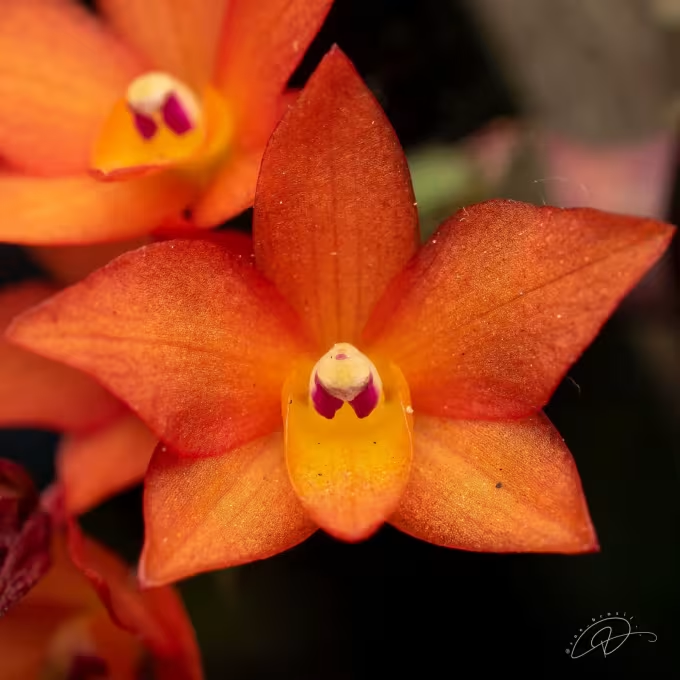
Description
Growing requirements
Cattleya cernua is a miniature orchid species belonging to the Orchidaceae family. Native to the coastal regions of Brazil, it naturally grows as an epiphyte on tree branches and rock faces.
This species is highly valued in horticulture for its compact growth habit and brilliant clusters of orange to red flowers. It requires specific environmental conditions to thrive in a domestic or greenhouse setting.
High light intensity is essential for this plant, often triggering a reddish pigment in the foliage. Unlike many other Cattleya species, it can handle higher light levels provided there is significant airflow to prevent overheating.
The root system requires an open, airy substrate such as fine-grade pine bark or can be grown on mounts. Proper drainage is the most critical factor in preventing root rot for this specific culture.
Temperature management should include a clear day-to-night difference to promote healthy maturation of pseudobulbs. Watering should be thorough during the growing season but must be tapered off to allow roots to dry out completely.
Main diseases and pests
The primary threats to Cattleya cernua are fungal and bacterial rots, usually triggered by poor ventilation or stagnant moisture around the root zone.
Common pests include spider mites, which thrive in low-humidity environments, and scale insects that cluster under the leaf sheaths and pseudobulbs.
If left untreated, these pests can cause significant physiological stress, leading to stunted growth and reduced blooming potential for the next season.
Integrated pest management is recommended, involving physical removal of insects and the application of appropriate horticultural oils or systemic insecticides.
Monitoring the plant for signs of desiccation or unusual spots on the leaves is vital for early detection and mitigation of potential infestations.