
Cattleya cinnabarina
Cattleya cinnabarina
Description
Growing requirements
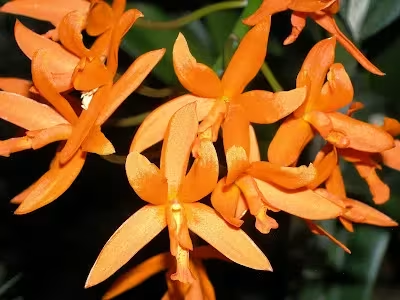
Cattleya cinnabarina is a species belonging to the Orchidaceae family, native to the rocky landscapes of Minas Gerais, Brazil. It is primarily a lithophyte, growing directly on rocks in high-altitude environments under intense sunlight.
The plant is characterized by slender, elongated pseudobulbs that can reach up to 40 cm in length. Each pseudobulb typically carries a single leathery leaf, which is structurally adapted to withstand high evaporation rates.
For successful cultivation, this orchid requires a high-intensity light environment, similar to its native habitat. Providing adequate air circulation is equally important, as it helps prevent thermal stress and fungal growth during the warmer months.
The potting medium must be coarse and highly porous, typically composed of bark, perlite, and charcoal to prevent waterlogging. It is essential to allow the roots to dry out completely between waterings to mimic the natural wetting and drying cycles.
Fertilization should be applied at a low concentration during the active growth phase, focusing on balanced NPK ratios to support healthy foliage and flower production.
Main diseases and pests
Common pests affecting Cattleya cinnabarina include scale insects and mealybugs, which often hide under the protective sheaths of the pseudobulbs. Early detection is crucial to prevent infestations from spreading.
Spider mites are prevalent in low-humidity environments, leading to the yellowing and necrosis of leaves. Regular misting or the use of humidifiers helps to mitigate this risk significantly.
Root rot and crown rot represent the most serious threats to this plant. These diseases are almost always caused by improper substrate conditions, specifically the use of decomposed media that retains too much moisture.
Management of these threats involves the isolation of infected plants, chemical control using appropriate pesticides, and the immediate replacement of the growing medium if signs of substrate breakdown are noted.
Biosecurity measures, such as sanitizing potting tools and keeping new acquisitions in quarantine, remain the most effective strategy for maintaining a healthy orchid collection.
Harvesting
The primary horticultural interest in this species lies in its vibrant, cinnabar-red blooms. The inflorescence, which can carry multiple flowers, serves as a significant feature for both exhibition and breeding purposes.
Harvesting for floral arrangements requires cutting the stem at the base of the inflorescence once the blooms are fully developed. Proper hydration of the stem post-harvest is essential for maintaining flower longevity in vases.