
Cattleya milleri
Cattleya milleri
Description
Growing requirements
Cattleya milleri is a distinguished member of the Orchidaceae family, native to the rocky outcroppings of Minas Gerais, Brazil. As a rupicolous species, it has evolved to thrive in specialized, high-light, and well-drained environments.
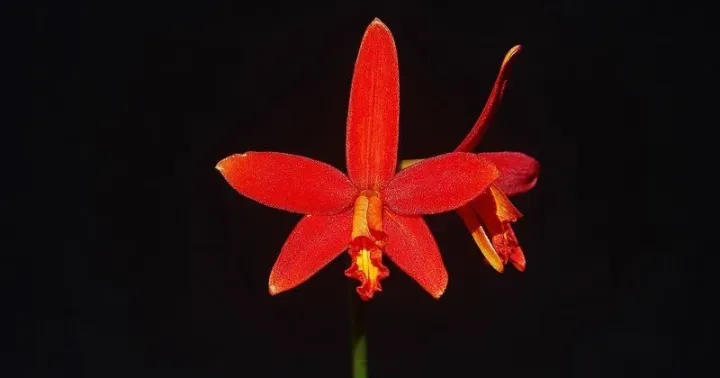
The plant features rigid, narrow leaves and slender pseudobulbs that store water and nutrients, enabling it to survive in its harsh, exposed natural habitat. Its brilliant, star-shaped flowers range from vibrant orange to deep red, making it a prized specimen among orchid enthusiasts.
Optimal light is the most significant requirement for this culture. High intensity, bright, filtered light is necessary to simulate the sun-drenched mountain ridges of its origin. Insufficient light is the primary cause of failure in blooming this specific species.
Cultivation requires an extremely open and inorganic-heavy substrate. Mixtures of coarse bark, perlite, and charcoal are standard to facilitate rapid drying of the roots. Potting in clay pots or net baskets is highly recommended for better aeration.
Temperature management involves mimicking a diurnal range, with warm days and significantly cooler nights. This temperature fluctuation is essential for triggering the plant's metabolic processes and ensuring long-term health and vigorous growth.
Main diseases and pests
Root rot is the most prevalent threat, often resulting from stagnant moisture in the root zone. Proper ventilation is mandatory to ensure that the moisture levels in the potting medium do not become excessive, especially during cooler periods.
Pests like mealybugs can infest the plant, hiding in the junctions between leaves and pseudobulbs. These pests must be manually removed or treated with appropriate insecticidal soaps to prevent damage to the plant's tissues.
Scale insects represent another significant danger, creating protective coverings that make them resistant to some treatments. Regular inspection is necessary to catch infestations before they spread across the entire collection.
Fungal infections can quickly destroy the plant if lesions develop on the leaves or pseudobulbs. Keeping the foliage dry, especially at night, is a critical preventative measure against leaf spotting fungi.
Viral infections remain an invisible but fatal risk to Cattleya milleri. Always ensure that all cutting tools are sterilized with high-temperature flame or chemical solutions before performing any maintenance or propagation work.