
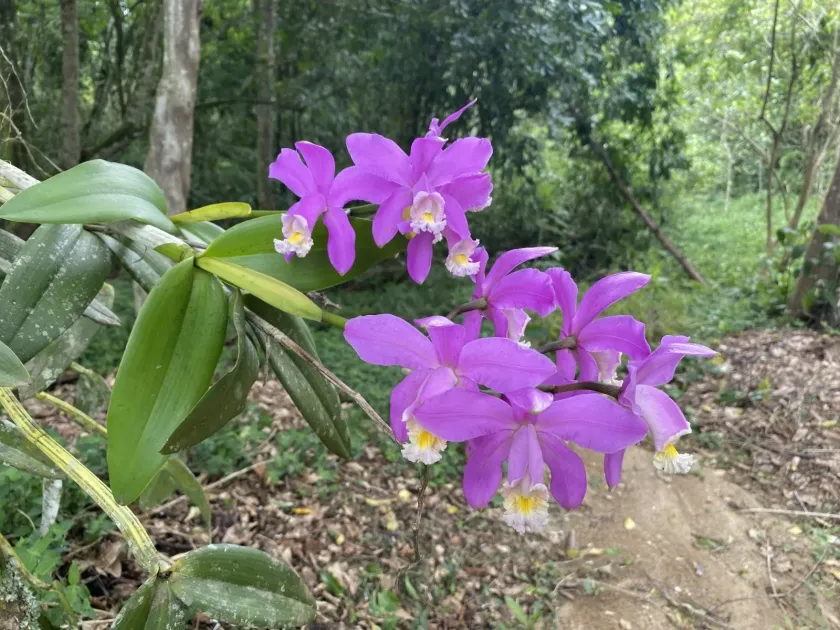
Cattleya harrisoniana
Cattleya harrisoniana
Description
Growing requirements
Cattleya harrisoniana is an epiphytic orchid species belonging to the Orchidaceae family. Native to the tropical regions of Brazil, it naturally thrives on trees along riverbanks, requiring specific environmental conditions to flourish in cultivation.
Successful growth requires bright, indirect sunlight. Exposure to direct afternoon sun should be strictly avoided to prevent foliage scorching, making east or west-facing windows ideal locations.
The temperature range should replicate a moderate tropical climate, with daytime highs around 22–26°C and a necessary nighttime drop to 16–18°C. This temperature fluctuation is essential for triggering the plant's natural flowering response.
The potting medium must provide excellent aeration and drainage. A mixture of medium-grade pine bark, charcoal, and a small amount of sphagnum moss is recommended to simulate an epiphytic habitat and prevent root suffocation.
Watering practices should follow the "soak and dry" method, allowing the substrate to dry out between waterings. Maintaining relative humidity levels between 60–70% is crucial for the overall health and vigor of the plant.
Yield
Cattleya harrisoniana is highly valued in the floriculture industry for its large, fragrant, and vibrant purple-pink blooms. It is a staple in many private collections and orchid conservatories worldwide.
Flowering typically occurs in late summer or early autumn. Well-established plants produce robust pseudobulbs, which serve as nutrient reservoirs and support the development of floral spikes carrying several flowers.
Optimizing plant productivity involves consistent nutrient management during the active growth phase. Using a balanced orchid fertilizer is recommended, though phosphorus-rich formulas may enhance bud production as the blooming season approaches.
Commercial propagation is achieved through the division of mature plants. Each division must retain at least three healthy pseudobulbs to ensure survival and encourage future blooming cycles.
With precise environmental control and proper nutritional support, a healthy Cattleya harrisoniana specimen can maintain a consistent flowering pattern for many consecutive years.
Main diseases and pests
Common pests affecting Cattleya harrisoniana include scale insects and mealybugs. These pests feed on plant sap, significantly weakening the plant and often causing distorted growth patterns in new leaves and spikes.
Spider mites are a frequent problem in low-humidity environments. Their presence is usually indicated by tiny yellow spots on the leaves and fine webbing near the pseudobulbs.
Fungal and bacterial rot are the most common diseases, usually resulting from over-watering or poor drainage systems. This leads to the blackening and decay of roots and the base of the plant.
Preventive maintenance involves regular inspection of the foliage and root zone. If infestations are detected, appropriate systemic insecticides should be applied to manage and eliminate the pest population.
Ensuring proper air circulation is a primary defense against pathogens. A well-ventilated growing area prevents moisture buildup and creates a hostile environment for most fungal diseases.