
Cattleya crispa
Cattleya crispa
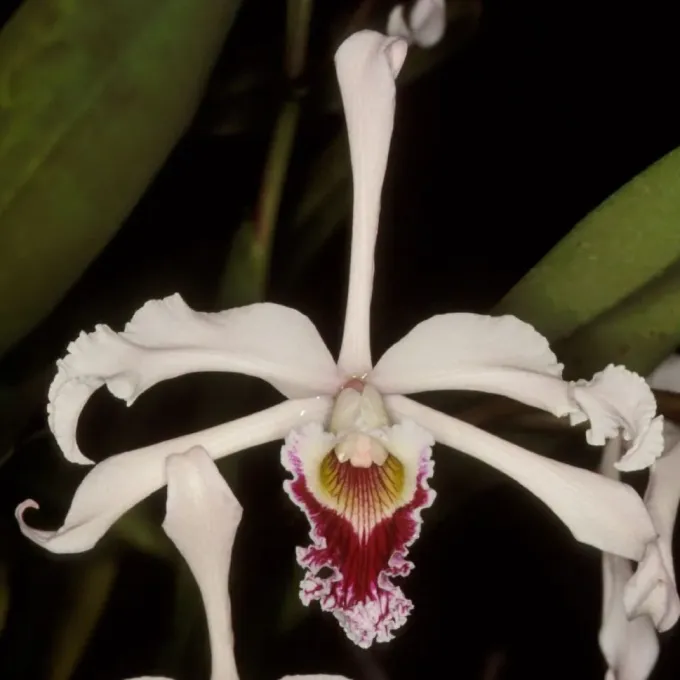
Description
Growing requirements
Cattleya crispa is an exquisite member of the Orchidaceae family, native to the tropical forests of Brazil. As an epiphyte, it naturally clings to tree trunks, relying on atmospheric humidity and filtered light to thrive in its native habitat.
For successful indoor cultivation, this orchid requires a consistent temperature range between 18°C and 25°C. A nocturnal temperature drop is crucial for the metabolic processes of the plant and helps in inducing the development of floral spikes during the growth cycle.
The choice of substrate is fundamental to its health; a well-draining mixture of pine bark, charcoal, and perlite is recommended. This allows for essential air circulation around the roots, preventing them from suffocation in a compacted medium.
Bright, indirect light is necessary for Cattleya crispa to bloom effectively. If the leaves become dark green, it indicates a lack of light, while reddish tints suggest excessive exposure; the target is a light olive-green color on the foliage.
Humidity levels should be kept between 60% and 80%, which can be maintained through the use of misting or automated humidifiers. Adequate airflow is equally important to ensure the foliage remains dry, preventing the development of bacterial infections.
Main diseases and pests
Common pests include spider mites, aphids, and scale insects that feed on the sap of the orchid. Early detection is key, and the use of insecticidal soap or neem oil is usually effective if the infestation is caught in its early stages.
Root rot is the most prevalent threat, usually caused by overwatering or the use of decomposed media that retains too much moisture. If rot occurs, the affected roots must be trimmed back to healthy tissue and the plant repotted in fresh substrate.
Fungal infections, characterized by black or brown spots on the leaves, thrive in stagnant air environments. Increasing the ventilation around the plant and reducing humidity levels temporarily can help curb the spread of these pathogens.
Viral infections can cause mottled patterns on leaves and stunted growth. Because there is no known cure for these viruses, affected plants must be isolated immediately to prevent transmission to other orchid collections via tools or insect vectors.
Good hygiene practices, such as sterilizing pruning shears between uses, are essential for maintaining a healthy orchid collection. Regular monitoring of the plant's health ensures that any issues are treated before they become catastrophic.