
Pennsylvania sedge
Carex pensylvanica Lam.
Description
Sowing dates
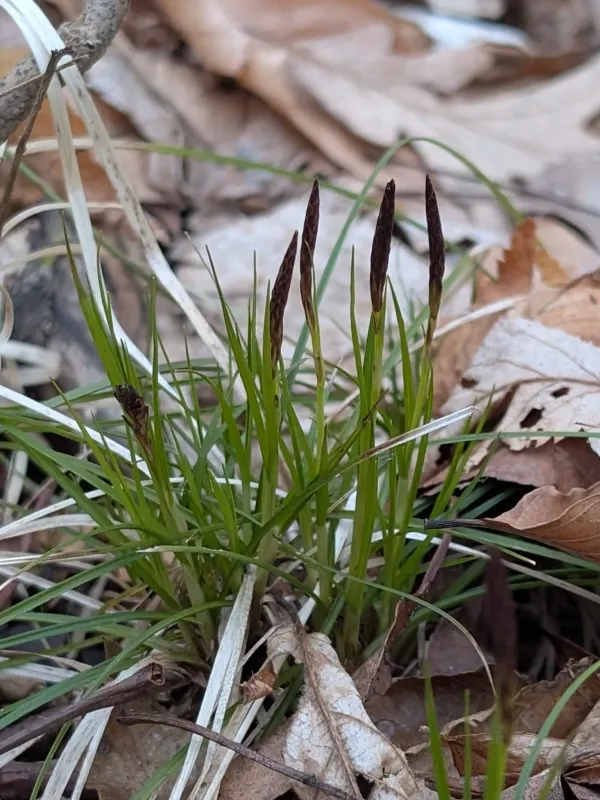
Pennsylvania sedge (Carex pensylvanica) is a perennial grass-like plant of the Cyperaceae family. It is widely recognized as a resilient groundcover that spreads through thin underground rhizomes, forming a dense and soft green carpet.
The primary method of propagation for this species is vegetative division. Dividing established clumps in early spring or autumn allows for the rapid expansion of the sedge population across a designated planting area.
While seeds can be collected, they require a cold stratification period to break dormancy, making vegetative division the preferred method for commercial growers and landscape professionals.
Spring planting should coincide with the thawing of the soil, ensuring the plant has enough time to establish its root system before the onset of high summer temperatures.
When planting in mass, spacing intervals of 20 to 30 centimeters are recommended. This spacing ensures that the plants will fill in the gaps over two growing seasons, creating an effective barrier against invasive weed species.
Growing requirements
Native to North America, Carex pensylvanica is well-adapted to woodland edges and open landscapes. It thrives in partial shade but can tolerate sun if the soil moisture levels remain consistent throughout the growing season.
The species prefers well-drained, slightly acidic to neutral soils. It is particularly valued for its ability to grow in dry soil conditions where other common turf grasses would struggle or perish due to drought stress.
Agricultural management for this sedge is minimal. Its ability to create a dense sod allows it to outcompete most common weeds, significantly reducing the labor required for manual weeding or herbicide applications.
Maintenance tasks include a light trimming of the foliage in late winter or early spring. This practice removes old, weathered leaves and promotes the emergence of vibrant, healthy new shoots.
Fertilization is rarely necessary in healthy soil conditions. If the plant shows signs of reduced vigor, a light application of balanced, slow-release organic fertilizer in early spring is sufficient to support seasonal development.
Main diseases and pests
Carex pensylvanica is inherently resistant to most agricultural pests and diseases. Its robust nature makes it a top choice for sustainable landscapes that require low input of chemical interventions.
Potential threats are typically limited to environmental stress, such as chronic waterlogging, which may predispose the root system to fungal infections or rot. Proper drainage is essential for long-term health.
In humid climates or poorly ventilated areas, fungal leaf spots may occasionally occur. These are easily managed by ensuring adequate airflow through regular maintenance and avoiding excessive overhead irrigation.
Insect pests are rarely a significant concern, although occasional damage from generalist feeders may be observed. Monitoring is usually unnecessary, as the plant quickly recovers from minor herbivory.
Overall, keeping the plant healthy through correct site selection and minimal disturbance is the most effective defense strategy against any biological threats that might affect this species.