
Okamoto sedge
Carex okamotoi Ohwi
Description
Growing requirements
Okamoto sedge (Carex okamotoi) is a perennial herbaceous plant belonging to the Cyperaceae family. It is native to Japan, where it typically thrives in forest understories and damp, shaded environments, developing into distinct, elegant clumps.
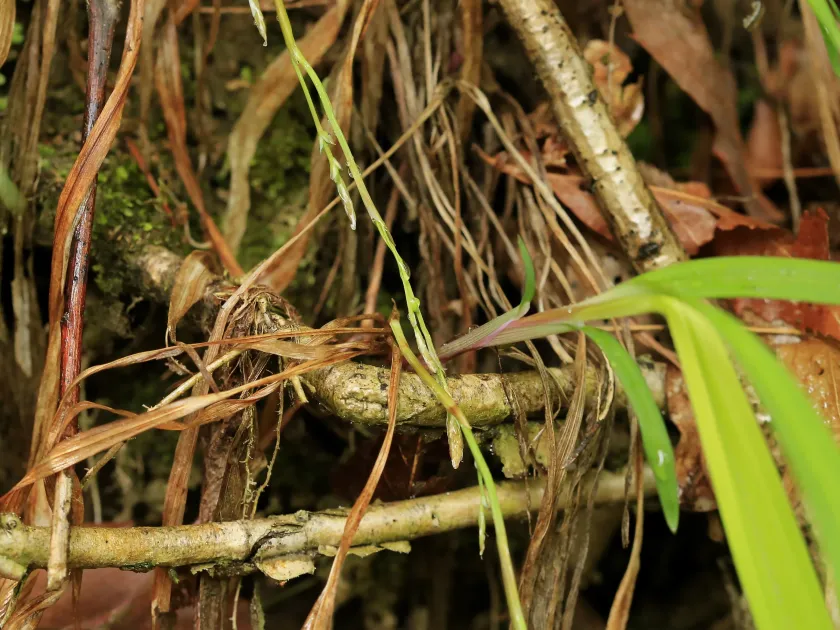
Botanically, this species is characterized by narrow, deep green leaf blades that form a neat, mound-like habit. It is a slow-to-moderate grower, making it an excellent candidate for ground cover in small-scale garden designs where precise plant structure is desired.
For successful cultivation, this plant requires sites with partial to full shade. Direct, harsh sunlight should be avoided to prevent foliar scorching. The soil must be well-drained yet consistently moist, rich in organic matter, and slightly acidic to neutral in pH.
In terms of agricultural and horticultural use, Okamoto sedge is primarily utilized as an ornamental plant for rock gardens, woodland borders, and as an accent plant in shady containers. Its ability to tolerate low-light conditions makes it highly adaptable for varied garden landscapes.
Routine care involves regular irrigation during dry spells to maintain soil moisture levels. It is recommended to apply a layer of leaf mulch around the base to suppress weeds, retain moisture, and provide a slow release of nutrients throughout the growing season.
Main diseases and pests
Potential threats to the plant include root rot caused by poor drainage and waterlogging in heavy soils. In humid environments with limited air circulation, the foliage may be susceptible to minor fungal infections or leaf spots.