
Spreading sedge
Carex laxiculmis Schwein.
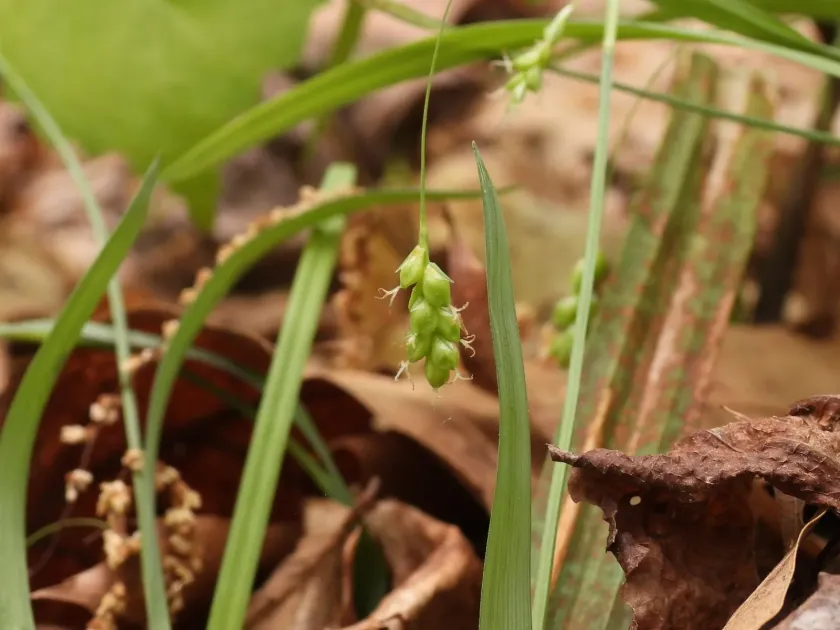
Description
Growing requirements
Spreading sedge (Carex laxiculmis) is a perennial member of the Cyperaceae family, native to the deciduous forests of North America. This plant is highly valued for its striking silvery-blue foliage and its ability to thrive in shaded environments where many other grasses fail.
The botanical structure of Carex laxiculmis features loose, spreading clumps with arched stems, which create a soft and lush visual effect in a garden setting. It is essentially a low-growing woodland grass that prefers dappled shade over intense sun.
To cultivate this species effectively, one must provide moist, well-drained, and nutrient-rich soil. It is particularly well-suited for woodland borders, shaded rock gardens, or as a groundcover beneath canopy trees where the soil remains consistently damp.
Climate considerations are crucial, as the plant prefers cooler, temperate zones. While it can withstand some competition from other forest floor plants, it performs best when provided with sufficient space for root development and adequate air circulation.
Maintenance involves routine watering during dry spells and annual cleanup in early spring. Cutting back old foliage before the new growth emerges ensures that the plant maintains its attractive silvery hue and stays clear of debris throughout the growing season.
Main diseases and pests
Like many sedges, Carex laxiculmis is relatively robust but can be prone to rust fungi if conditions remain stagnant and overly humid. Ensuring that the foliage has access to airflow is the primary defense against such fungal issues.
Slugs and snails represent the main pest concern, particularly in the spring when new, tender foliage is developing. Applying mulches that are abrasive or utilizing organic slug control methods can help protect the plant from significant damage.
Root rot is a risk factor if the soil remains waterlogged without any drainage for an extended duration. Soil structure should be improved with organic amendments to prevent compaction and ensure a healthy root environment.
Though it is resistant to most common grass diseases, stress caused by severe drought can weaken the plant's natural defenses, making it more susceptible to secondary infections or pest infestations.
Monitoring the plants during periods of rapid growth is essential for maintaining health. Early detection of any yellowing or stunted growth allows for quick intervention, ensuring the longevity of the plant in its chosen habitat.