
Tufted sedge
Carex elata All.
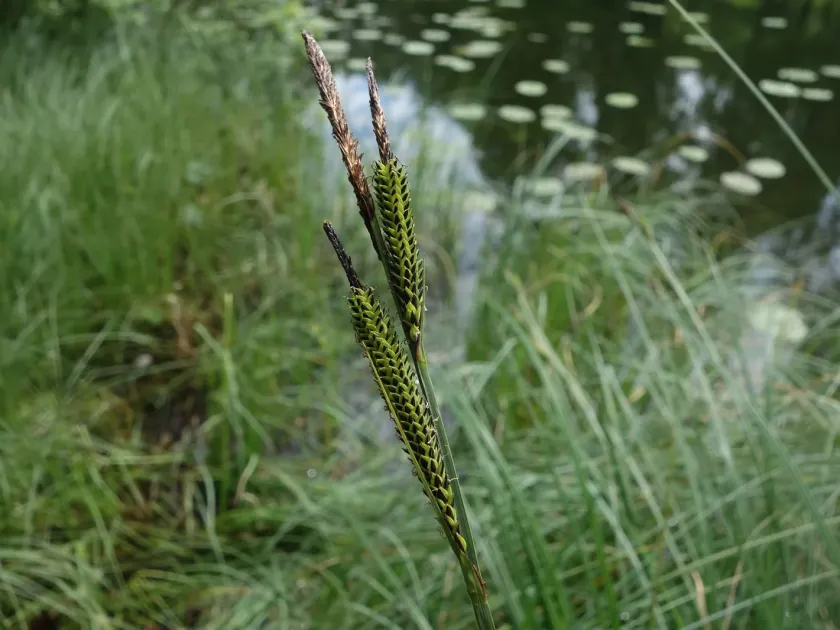
Description
Growing requirements
Tufted sedge (Carex elata) is a robust perennial herb belonging to the Cyperaceae family. Native to Europe and parts of Western Asia, this species is well-known for its ability to thrive in wet, marshy habitats and along the margins of standing water bodies.
The plant is distinguished by its dense, tussock-forming habit. Over many years, these tussocks can grow quite tall, creating unique structures that provide essential micro-habitats for various organisms within wetland ecosystems.
Carex elata requires consistently moist or saturated soil conditions. It is an excellent choice for sites near water, such as pond edges, marshes, or low-lying areas that remain wet throughout the growing season, showing high tolerance for periodic inundation.
In terms of light exposure, it prefers full sun but demonstrates considerable flexibility, being capable of thriving in partial shade. It is remarkably winter-hardy and adapts well to various soil types, ranging from nutrient-rich loams to damp peat.
Beyond its ecological importance in nature, this sedge is valued in horticulture for its sculptural appearance. It is frequently employed in water garden design, bioremediation projects, and for soil stabilization along the banks of natural and artificial ponds.
Main diseases and pests
Tufted sedge is generally resistant to most pests and diseases. However, in poorly ventilated environments or overcrowded plantings, it may be susceptible to fungal issues such as leaf spot or rust, which can affect the aesthetic quality of the foliage.
Pest pressure is typically minimal. Occasional herbivory by lepidopteran larvae or specialized leaf-feeding beetles may occur, but these rarely reach levels that require chemical intervention in a balanced ecosystem.
Good maintenance practices, including the removal of dead foliage in late winter or early spring, help to promote vigorous growth and prevent the buildup of pathogens within the dense tussocks.
In certain habitats, voles or other small rodents might gnaw at the base of the tussocks during harsh winters when food sources are scarce, which could potentially weaken individual plants.
The primary control strategy should focus on cultural methods. Ensuring appropriate spacing between plants and maintaining optimal water levels helps to keep the plants vigorous, which serves as the best natural defense against potential threats.