
Aloe arborescens
Aloe arborescens Mill.
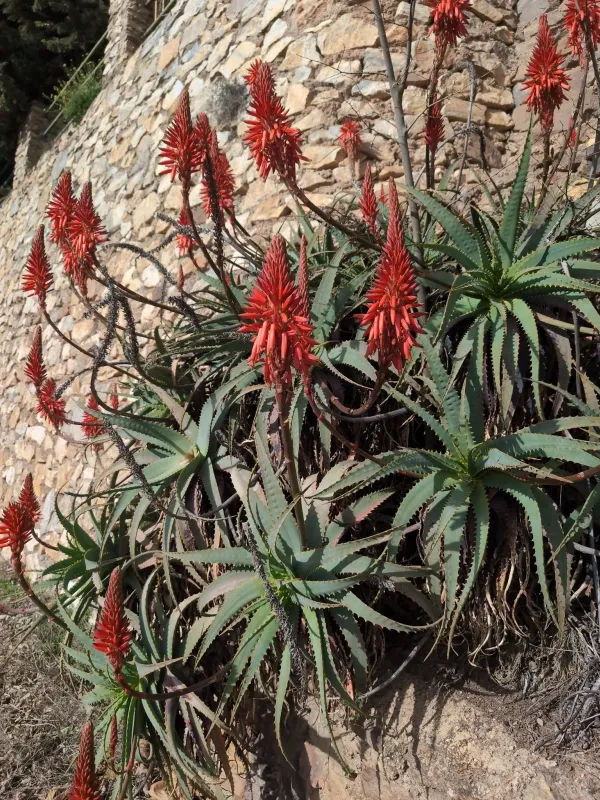
Description
Growing requirements
Aloe arborescens (commonly known as Krantz aloe) belongs to the Asphodelaceae family. It is a succulent perennial shrub originating from the southern parts of Africa.
The plant thrives in well-draining, sandy or rocky soils with moderate fertility. High light exposure is essential for the plant to maintain its structural integrity and leaf density.
It prefers temperatures between +20 °C and +30 °C. While it is hardy in arid environments, it must be protected from hard frost as it is highly sensitive to freezing temperatures.
Watering requirements are low; during the growing season, irrigation should be deep but infrequent, allowing the soil to dry out completely between waterings.
Agricultural management includes site selection with southern exposure and strict adherence to irrigation protocols to avoid root rot in intensive cultivation.
Main diseases and pests
Root rot caused by Phytophthora species is the most severe threat, typically resulting from improper drainage or excessive watering.
Mealybugs are common pests that colonize the base of leaves and flower spikes, feeding on the plant sap and hindering growth.
Scale insects can also infest the succulent leaves, causing yellowing and stunted development if not managed with appropriate horticultural oil treatments.
Environmental stress, such as low light or poor air circulation, makes the plant susceptible to various bacterial infections that cause leaf spots.
Integrated Pest Management (IPM) strategies, including physical removal and spot treatment, are recommended for large-scale operations.
Harvesting
Harvesting for medicinal or industrial use focuses on mature leaves, typically taken from plants that are at least three to four years old.
The lower, older leaves contain the highest concentration of active compounds, making them the primary target for commercial harvesting.
Using a clean, sharp knife, leaves should be sliced near the main stem, ensuring the internal tissue of the plant remains undamaged.
Once harvested, leaves should be processed immediately as the gel begins to oxidize and lose its potency upon exposure to oxygen and light.
Crop rotation or selective harvesting cycles are utilized to ensure the plant remains healthy while maximizing the yield of green biomass over several seasons.