
Tolmie's star-tulip
Calochortus tolmiei
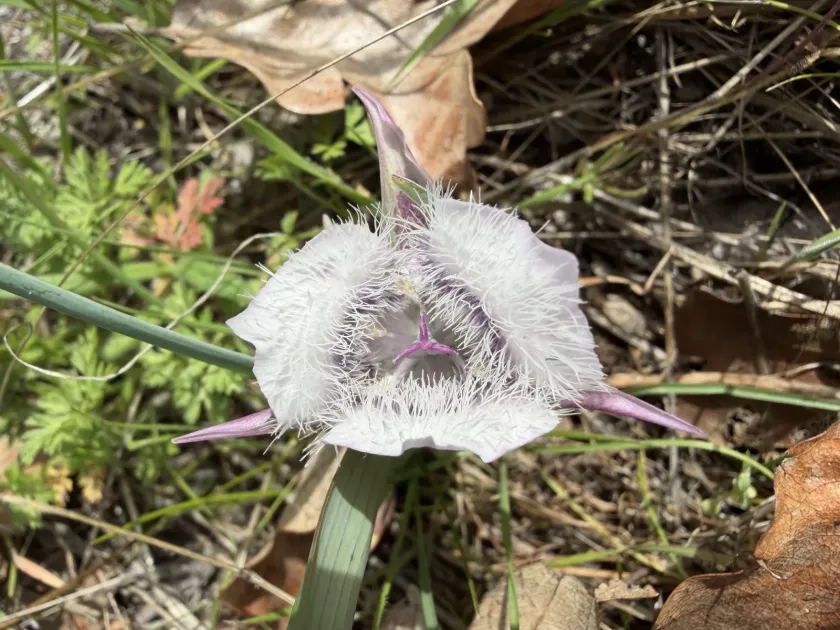
Description
Sowing dates
Planting Tolmie's star-tulip bulbs should occur in the autumn months, ensuring the soil has cooled down but is not yet frozen, allowing roots to establish.
Seed propagation requires a cold stratification period of several weeks to simulate winter conditions, which is essential for uniform germination.
Using a well-draining, sandy-based potting mix is critical for both seeds and bulbs to prevent any risk of rot during the initial rooting phase.
If planting in the spring, ensure that the bulbs are kept in a cool, ventilated place until they are ready to be placed in the soil, avoiding heat stress.
The standard planting depth for bulbs is approximately 5 to 8 centimeters, though this can be adjusted depending on local soil texture and drainage capacity.
Growing requirements
Calochortus tolmiei belongs to the Lily family (Liliaceae) and is widely recognized for its delicate, hairy petals that give it a unique aesthetic appeal.
Native to western North America, this species thrives in environments characterized by wet winters and dry, warm summers on well-drained slopes.
The soil must be light and gritty to mimic the plant’s natural habitat, as heavy clay soils will cause immediate damage to the bulb tissue.
Full sun to light partial shade is ideal for this species, though it requires protection from extreme heat that could dehydrate the foliage too quickly.
Crucially, the plants must remain dry during their summer dormant phase, making it essential to avoid irrigation once the flowering process is complete.
Main diseases and pests
The primary threat to Calochortus tolmiei is poor drainage, which leads to bulb rot and fungal infections, especially if the soil stays wet during dormancy.
Soil-dwelling pests, such as wireworms and various beetle larvae, can feed on the bulbs, causing significant structural damage and plant loss.
Slugs and snails are particularly problematic during the spring, as they tend to consume the developing foliage and flower buds with high frequency.
Viral infections can affect the health of the plants, typically manifesting as color breaks in the petals or stunted growth patterns throughout the season.
- Maintaining rigorous drainage protocols in planting zones.
- Using protective barriers or bait to manage gastropod populations.
- Inspecting bulbs for rot before and during the planting process.