
Calochortus kennedyi
Calochortus kennedyi
Description
Growing requirements
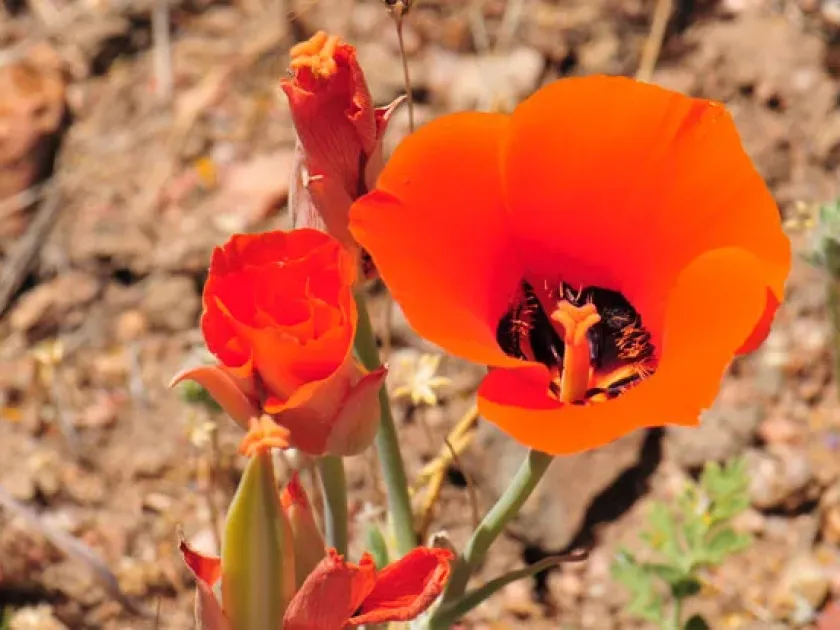
Calochortus kennedyi is a member of the Liliaceae family, native to the arid desert regions of the Southwestern United States. It is a bulbous perennial characterized by its vibrant orange-red flowers.
The cultivation of this plant requires a precise imitation of its native environment, characterized by extreme drainage. Growers must ensure the substrate consists primarily of grit or sharp sand to prevent bulb rot.
Optimal growth occurs in full sun exposure. The species is highly drought-tolerant, having evolved to thrive in high-heat desert climates with minimal irrigation during the summer dormancy phase.
Soil requirements dictate a neutral or slightly alkaline pH level. Heavy soil compaction is detrimental to the development of the bulb and root health, thus requiring significant amendments for successful container or garden growth.
Economically, this species is cultivated primarily for specialized ornamental purposes. Its unique aesthetic value makes it a sought-after specimen for rock gardens and desert-themed landscapes.
Main diseases and pests
The primary threat to the species is fungal infection, particularly Fusarium wilt, often triggered by excessive humidity or poor soil aeration. Preventing water stagnation is the most critical management strategy.
Pest management focuses on mitigating damages from bulb mites and nematodes. These organisms often exploit damaged or weakened bulb tissues, making proper handling during planting essential.
Aphids can frequently colonize the flower stalks, leading to stunted development of the blooms. Integrated pest management using insecticidal soap is recommended for control during the active growing season.
Cultural practices should emphasize cleanliness, such as disinfecting gardening tools and strictly monitoring moisture levels. Stressed plants are significantly more susceptible to environmental pathogens.
Regular monitoring of the bulb's health, especially during the dormancy period, ensures that early signs of fungal invasion can be treated promptly before they spread to healthy specimens.