
Sego Lily
Calochortus nuttallii
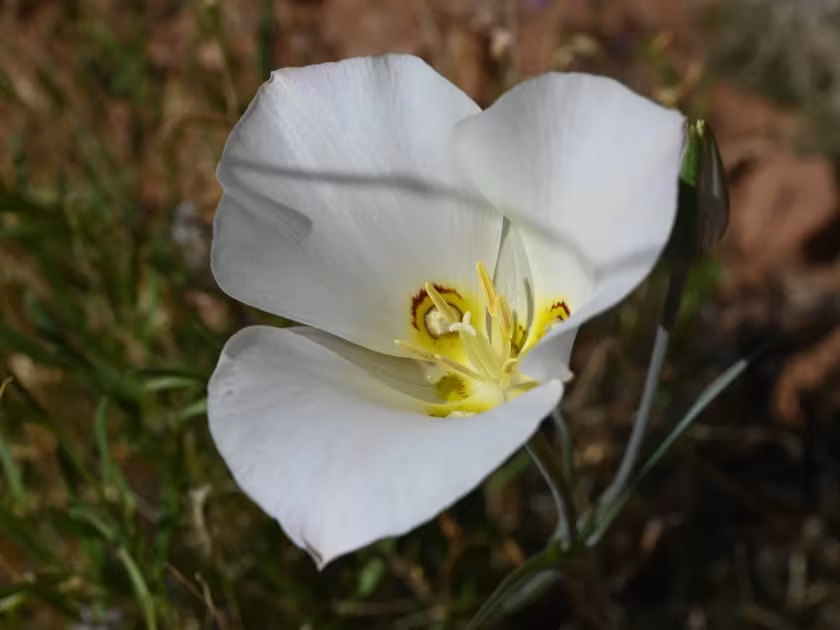
Description
Sowing dates
Sowing seeds of Calochortus nuttallii is best performed in the autumn season. The seeds require a period of cold stratification to break dormancy, mimicking the natural cycle of the mountain regions where they originate.
When planting in containers, use a gritty, well-draining substrate composed primarily of sand and fine gravel. Proper moisture management is crucial during the germination phase to ensure the young bulbs begin to develop.
Seedlings develop slowly and may take several years to reach maturity and produce their first flowers. Patience and consistent light levels are essential for the long-term success of the cultivation process.
Vegetative propagation via offsets is a more efficient way to multiply established populations. This should be undertaken when the foliage has completely withered and the bulbs are fully dormant.
When transplanting young bulbs, ensure that the root system remains intact, as the species is sensitive to root disturbance. Always replant them at the same depth they were originally growing.
Growing requirements
As a member of the Lily family (Liliaceae), the Sego Lily thrives in arid conditions with excellent drainage. The soil must be loose, rocky, or sandy to prevent moisture accumulation around the bulb.
The plant requires full sun exposure to promote healthy development and vibrant blooms. In shaded areas, the plants often become leggy and fail to produce viable seeds or offset bulbs.
Climatic requirements involve a stark contrast between a moist growing season in spring and a bone-dry dormancy period in summer. Artificially maintaining dry soil during summer is critical for preventing rot.
Calochortus nuttallii is well-adapted to alkaline soils and requires very little fertilization. Excess nutrient levels often lead to soft growth that is more susceptible to pests and winter damage.
- Exceptional drainage is mandatory.
- Full, direct sunlight is preferred.
- Strictly defined summer dormancy.
- Avoidance of heavy, clay-based soils.
Main diseases and pests
Fungal rot is the most significant threat to the survival of Sego Lily bulbs. It typically occurs due to poor soil structure or overwatering during the dormant period.
Aphids can occasionally colonize the floral stems during the peak growing season. While usually not fatal, heavy infestations can reduce the aesthetic value and weaken the plant's vigor.
Root-feeding insects or larvae may occasionally damage the base of the bulb. Implementing crop rotation or soil sterilization before new planting helps mitigate this threat in garden settings.
Rodents and small mammals are known to consume the bulbs of native lilies. Protecting patches with hardware cloth or buried wire mesh is highly recommended to preserve the population.
Viruses transmitted by sap-sucking insects can cause mosaic patterns on leaves. Immediate removal of affected specimens is necessary to protect the remaining plants from contamination.