
Roe's Cypress Pine
Callitris roei
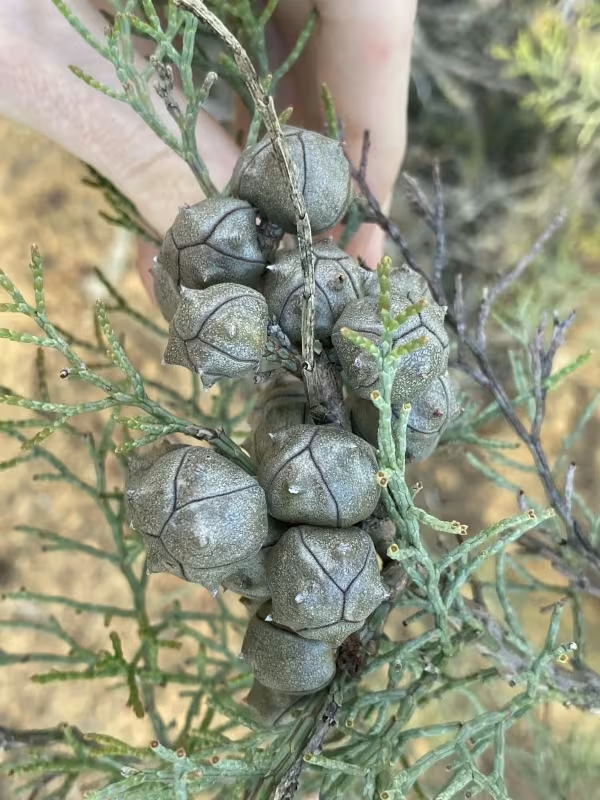
Description
Growing requirements
Callitris roei, known as Roe's Cypress Pine, is a hardy evergreen conifer belonging to the Cupressaceae family. This species typically grows as a compact shrub or a small tree, exhibiting distinct foliage and a highly resilient growth habit adapted to arid environments.
The native habitat of this species is primarily located in the southwestern regions of Western Australia. It thrives in unique ecological zones characterized by sandy or gravelly soils, demonstrating a remarkable tolerance for moisture-limited climates.
In terms of soil requirements, this crop demands excellent drainage. It is highly intolerant of waterlogged conditions, which lead to root rot. Soils should be sandy, aerated, and preferably low in nutrients, mimicking the natural conditions of the Australian bushland.
Exposure to full sunlight is essential for the healthy development of Callitris roei. Lack of proper solar intensity leads to sparse growth and foliage thinning, which significantly detracts from the plant’s ornamental value and physiological strength.
Agronomic management is minimal, reflecting the species' adaptation to poor soil. Fertilizer application should be avoided, as high nitrogen levels induce soft growth that is more susceptible to environmental stress and cold damage.
Harvesting
The primary utility of Callitris roei lies in ornamental landscaping, particularly in xeriscaping projects. Its drought-tolerant nature makes it an excellent choice for water-efficient gardens and low-maintenance hedges in Mediterranean climates.
Seed harvesting involves collecting woody cones once they are fully mature. Propagation is primarily achieved through seeds, which require stratification to achieve optimal germination rates. Nursery management of young seedlings is crucial for future establishment.
In landscape architecture, it is used for its structured, evergreen appearance that maintains its shape throughout the seasons without heavy pruning requirements. It serves as an excellent windbreak in regions prone to erosion.
When cultivating these plants in containers, it is vital to ensure depth, as the species develops a prominent taproot. Any restriction in the root system can result in stunted growth and instability once the tree is transplanted into the landscape.
While the wood of the genus Callitris is famously rot-resistant and valued for its durability, Callitris roei is primarily conserved for its botanical interest and ecological value rather than commercial timber production.