
Mueller's cypress pine
Callitris muelleri
Description
Growing requirements
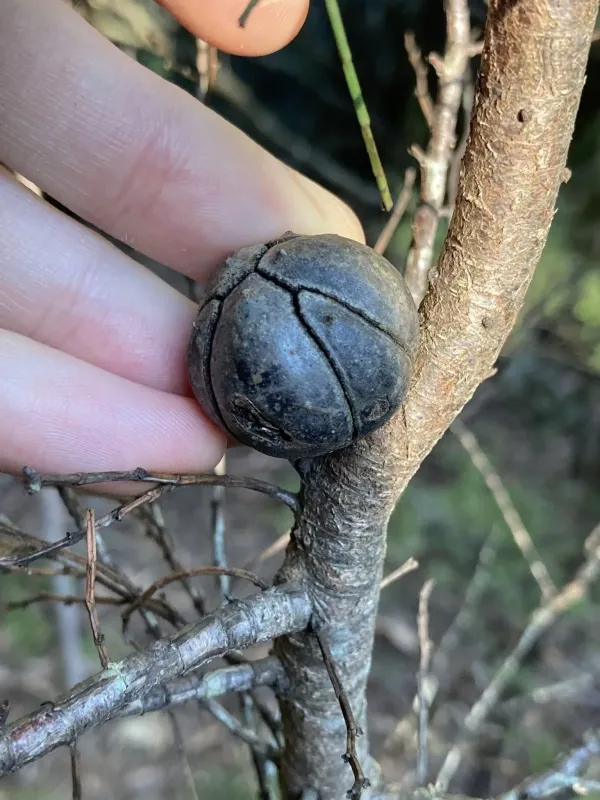
Mueller's cypress pine (Callitris muelleri) is a perennial conifer belonging to the Cupressaceae family. It is a slow-growing evergreen tree that typically reaches moderate heights, characterized by its distinct segmented foliage and woody, cone-bearing structure.
The species is native to eastern Australia, specifically inhabiting the rocky outcrops and sandstone plateaus of New South Wales. Its natural evolution in such harsh environments has granted it significant resistance to nutrient-poor soils and sporadic water availability.
In cultivation, this species thrives in full sun exposure. It requires a location with ample natural light to maintain its compact growth form and to prevent the lower branches from thinning or dying off prematurely.
Regarding soil requirements, Callitris muelleri demands excellent drainage. While it is tolerant of low soil fertility and rocky substrates, it is highly sensitive to waterlogged conditions, which frequently cause fatal root rot in domestic garden settings.
The economic value of this tree lies in its highly durable and insect-resistant timber. In landscapes, it serves as an excellent ornamental specimen for xeriscaping or as part of native flora displays where a structured, evergreen presence is desired.
Main diseases and pests
The most significant threats to Callitris muelleri are fungal pathogens, particularly Phytophthora species, which thrive in poorly drained soil. Root health is the most critical factor in the long-term survival of this conifer.
Scale insects are common pests that feed on the sap of the foliage. Heavy infestations result in chlorosis, needle drop, and the secretion of honeydew, which can further attract secondary fungal infections like sooty mold.
Spider mites represent a potential risk during prolonged periods of hot and dry weather. These pests colonize the needles and cause them to lose their vibrant green color, eventually leading to a bronzed or withered appearance.
Mechanical damage from boring insects can occur in weaker specimens, often exacerbated by environmental stress. Monitoring the bark for holes or frass is an essential part of maintaining the health of the individual trees.
Proper cultural management, including spacing trees to allow for natural air circulation and avoiding overhead watering during humid periods, is the most effective way to prevent the establishment of diseases and pests in the plantation.