
Drummond's cypress pine
Callitris drummondii
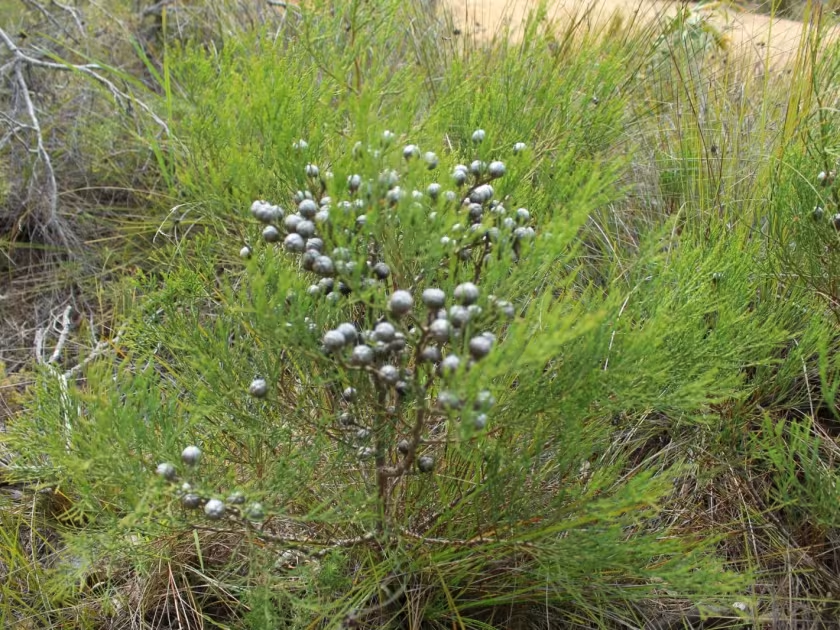
Description
Growing requirements
Drummond's cypress pine (Callitris drummondii) is a member of the Cupressaceae family. It is a slow-growing evergreen shrub native to the southwestern parts of Western Australia.
The plant is specifically adapted to Mediterranean-type climates, characterized by dry, hot summers and mild, wet winters. It thrives in well-draining, sandy or gravelly soils found in its natural heathland habitat.
Exposure to full sunlight is critical for the development of a dense and healthy structure. Insufficient light leads to etiolation, which significantly weakens the plant's aesthetic and physiological state.
Watering regimes should be kept minimal once the plant is established. It shows remarkable drought tolerance, but proper irrigation is necessary during the seedling stage to ensure a strong root structure.
Temperature stability is vital, as this species does not handle heavy frost well. It is best suited for climates with temperate or semi-arid conditions where extremes are minimized.
Yield
The economic utility of Callitris drummondii is primarily concentrated in the horticultural and landscape design sectors rather than industrial forestry or agriculture.
Its high ornamental value is derived from its unique foliage structure and drought-resilient nature, making it a preferred choice for xeriscaping and dry gardens.
Production cycles in nurseries are lengthy due to the species' slow growth rate, requiring patience and long-term management strategies for commercial output.
As a container plant, it maintains a compact form, which is highly appreciated in urban landscaping and terrace gardening in suitable climate zones.
Though not a high-yield timber crop, its potential as a specialized ornamental plant is growing among collectors and designers of climate-smart landscapes.
Main diseases and pests
The most significant threat to Callitris drummondii is root rot caused by poor soil drainage and waterlogging, which often leads to rapid decline.
Pests such as scale insects and mealybugs can infest the foliage, particularly if the plant is grown in environments with poor air circulation or high humidity.
Pathogenic fungi like Phytophthora species are major concerns for this species, often causing crown dieback that is difficult to reverse once symptoms appear.
Maintaining a clean growing environment and avoiding high-nitrogen fertilizers helps to keep the plants resistant to common fungal pathogens.
Regular monitoring of the foliage for discoloration or silk webbing is advised to catch infestations before they cause irreversible damage to the plant structure.