
Oyster bay pine
Callitris rhomboidea
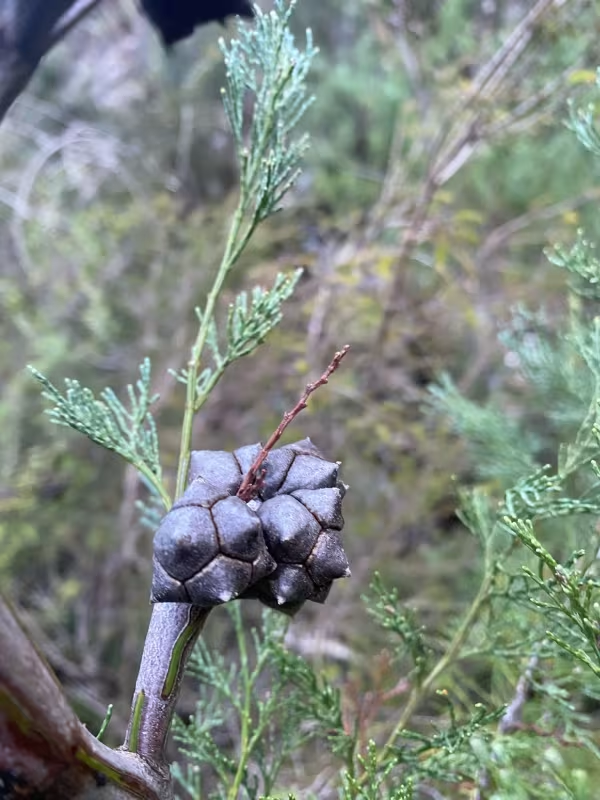
Description
Sowing dates
Propagation of Callitris rhomboidea is primarily performed through seeds, which should be harvested from mature cones. The cones need to be dried in a warm place until they open to release the seeds.
Seeds are sown in early spring into a well-draining substrate composed of sand and peat. Maintaining stable moisture is crucial for germination, but overwatering must be strictly avoided.
Seedlings usually emerge within a few weeks and require bright, indirect light to develop properly. Once the true leaves appear, the seedlings can be thinned out or transplanted into individual containers.
When the plants reach a sufficient size, they are hardened off before being planted into their permanent outdoor location. It is important to wait until all frost risks have passed.
For uniform growth in plantations, container-grown saplings are often kept for at least one season to ensure the root system is well-established before transplanting.
Growing requirements
The Oyster Bay Pine is a member of the Cupressaceae family and is native to Australia. It is well-adapted to various environments, ranging from coastal areas to rocky slopes.
This species thrives in full sun, which is essential for maintaining its dense, attractive foliage. Insufficient light leads to sparse growth and loss of the plant's natural shape.
Soil requirements are relatively modest; the plant prefers well-draining, sandy, or stony soils. It has a high tolerance for poor nutrient content, provided that the drainage is efficient.
Water management is the key to successful cultivation. While the tree is drought-tolerant once established, regular watering during the first years of growth significantly enhances development.
The plant is suited for temperate climates. While it can handle occasional light frosts, extreme cold can cause damage to its foliage and overall structure.
Yield
The economic value of Callitris rhomboidea lies in its highly durable wood, which is naturally resistant to termites and rot, making it useful for woodworking and outdoor construction.
In landscaping, this conifer is prized for its aesthetic appeal, often used in hedges, screens, or as a feature plant due to its unique growth habit and green color.
Commercial timber production requires long-term management, including proper thinning and pruning to encourage straight trunk development and reduce branch knotting.
The plant's biomass production is moderate, necessitating sustainable forestry practices to maintain long-term productivity of the plantation site.
Potential for essential oil extraction from the foliage exists, although it is not as common as other pine species, representing a secondary niche for its economic use.
Main diseases and pests
Root rot is the most significant threat to the Oyster Bay Pine, usually caused by poor soil drainage and excessive soil moisture during warmer periods.
Insect pests, such as scale insects, may infest the branches, causing yellowing and dieback of the foliage. Regular inspection is necessary to detect infestations early.
Environmental stress, such as strong winds in exposed locations, can cause mechanical damage or limb breakage, making the tree susceptible to secondary infections.
Preventive maintenance includes keeping the base of the tree clean of weeds and debris to improve air circulation and reduce the risk of pathogen accumulation.
If disease or pest presence is detected, selective pruning of the affected parts is recommended, followed by the appropriate application of antifungal or insecticidal treatments.