
Calathea veitchiana
Calathea veitchiana
Description
Growing requirements
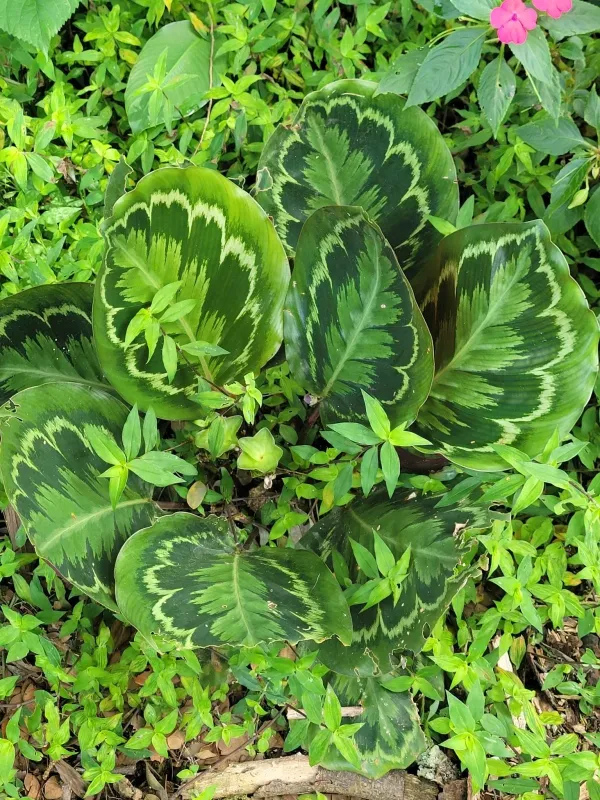
Calathea veitchiana is an ornamental perennial belonging to the Marantaceae family. Originating from the tropical rainforests of Ecuador, this species thrives in environments characterized by high humidity, stable temperatures, and filtered light beneath the dense forest canopy.
Botanically, the plant is known for its large, broad, oval leaves with complex variegation patterns on the surface and deep purple hues on the underside. Its primary physiological feature is the diurnal movement of leaves, which fold upward in the evening, a process known as nyctinasty.
Successful cultivation requires a well-aerated, slightly acidic substrate. A mixture of peat moss, perlite, and coniferous bark is recommended to ensure optimal drainage and gas exchange for the roots, as compacted soils often lead to asphyxiation of the root system.
Agrotechnical maintenance focuses on climate regulation. The ideal temperature range is between 20°C and 25°C, with humidity levels maintained above 70%. Exposure to cold drafts or dry air from heating systems typically results in leaf curling and marginal necrosis.
The main commercial and domestic utility of this crop lies in its aesthetic value. It is widely cultivated for interior decoration in botanical gardens, greenhouses, and residential spaces, valued both for its foliage architecture and its air-purifying capabilities.
Main diseases and pests
The culture is susceptible to common greenhouse pests, primarily spider mites and mealybugs. These infestations are most prevalent in low-humidity environments where the plant's defense mechanisms, specifically the waxy cuticle of the leaves, become less effective.
Pathological issues often involve root rot and fungal leaf spot infections, which are frequently triggered by waterlogging and poor ventilation. Cultural management involves strictly controlled irrigation schedules and, if necessary, the application of systemic fungicides to ensure plant health.