
Calathea allouia
Calathea allouia
Description
Sowing dates
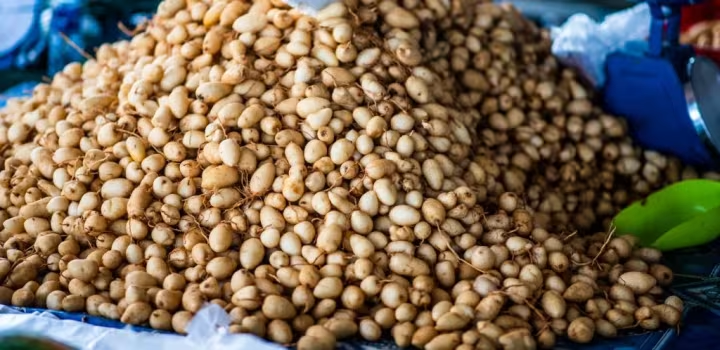
Calathea allouia, commonly known as "lerén", is a perennial herbaceous plant belonging to the Marantaceae family. Unlike its ornamental relatives, this species is cultivated primarily for its edible tuberous roots, which are a significant starch source.
Propagation is typically achieved through vegetative means, specifically by dividing the rhizomes or utilizing plant offsets. In tropical regions, planting is usually timed with the onset of the wet season to take advantage of natural rainfall.
The crop requires well-drained, loose soil that is rich in organic matter. Proper soil preparation is essential to ensure that the tubers can expand without restriction, leading to higher yields and better quality produce.
Planting density generally involves spacing plants about 60 to 80 centimeters apart. This spacing is crucial for allowing the foliage to develop fully, ensuring maximum photosynthetic efficiency for the plant.
During the early stages of growth, maintaining weed-free conditions is vital. The plant requires minimal intervention once established, but keeping the area around the base clean helps prevent nutrient competition.
Growing requirements
As a tropical plant, Calathea allouia thrives in warm climates with temperatures consistently ranging between 22 and 30 degrees Celsius. It is highly sensitive to cold and requires a frost-free environment to survive.
Consistent moisture is the most important requirement for successful cultivation. While the plant appreciates heavy rain, it requires well-drained soil to prevent waterlogging, which can easily damage the root system.
The soil should be slightly acidic to neutral and highly enriched with compost or organic fertilizers. This nutrient-rich environment supports the development of healthy, plump tubers.
The plant is adapted to light shade and can perform well under the canopy of taller crops or forest trees. Direct, intense sunlight can sometimes scorch the leaves and dry out the soil too quickly.
Mulching is a standard agricultural practice for this crop, as it helps conserve soil moisture and suppresses the growth of competitive weeds in the planting rows.
Yield
Calathea allouia typically produces between 5 and 10 metric tons of tubers per hectare, depending on soil fertility and management intensity. This makes it a valuable crop for regional food stability in its native tropical range.
The tubers themselves are prized for their crisp texture and high starch content. When cooked, they offer a pleasant taste and are easily digestible, making them a staple in various traditional culinary preparations.
Beyond the tubers, the leaves of the plant are often utilized as biodegradable packaging materials. Their strength and size make them an excellent sustainable alternative in local rural markets.
Ongoing agricultural interest focuses on optimizing yields through better fertilization regimes and selecting varieties that show higher resilience to the fluctuating climate patterns.
The economic potential of the crop is recognized in both subsistence farming and small-scale commercial ventures, particularly for those looking to diversify starchy food production.
Main diseases and pests
The main threats to Calathea allouia are fungal infections in the root zone, usually caused by poor drainage or prolonged flooding of the field. These pathogens can cause significant post-harvest and pre-harvest losses.
Nematodes are a persistent pest that can attack the root system, causing stunted growth and lower tuber quality. Integrated pest management strategies are often required to control these microscopic threats.
Foliar pests, such as spider mites, can damage the leaves during periods of low humidity. This reduces the plant's capacity for photosynthesis and directly affects the overall biomass of the tuber harvest.
Proactive disease management includes the use of certified disease-free planting material and the rotation of crops to prevent the build-up of soil-borne pathogens in the fields.
Regular field scouting is essential to identify symptoms of stress or infestation early, allowing for timely intervention and protecting the health of the entire crop stand.
Harvesting
Harvesting usually takes place between 8 and 10 months after planting, signaled by the yellowing and natural decline of the above-ground foliage. This marks the peak maturity of the subterranean tubers.
Careful excavation is required to avoid damaging the delicate skin of the tubers. Hand tools are preferred over heavy machinery to ensure the physical integrity of the harvest, as broken tubers spoil quickly.
After collection, the tubers should be cleaned of dirt and air-dried in a shaded, well-ventilated area. This curing process helps prepare the produce for storage by hardening the outer skin.
Storage requires cool and humid conditions to prevent the tubers from dehydrating and becoming overly fibrous. Proper storage allows the harvest to be kept for several weeks or even months.
The final product is versatile in the kitchen, often boiled or fried, and it serves as a healthy, starchy alternative to potatoes or cassava in a balanced tropical diet.