
Calathea fasciata
Calathea fasciata
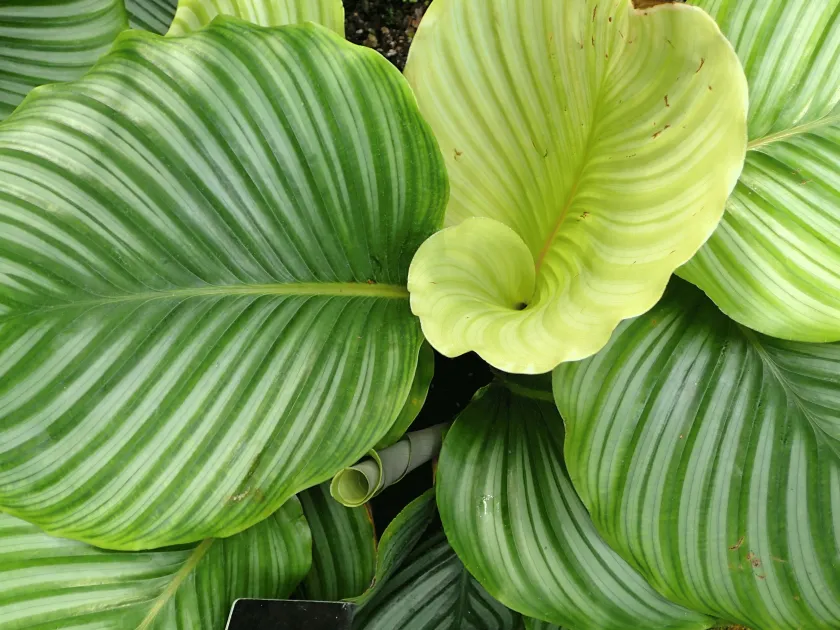
Description
Growing requirements
Calathea fasciata is a perennial herbaceous plant belonging to the Marantaceae family. It originates from the tropical rainforests of Brazil, where it thrives in humid environments under the forest canopy.
Botanically, the plant is recognized for its broad, striped leaves that exhibit natural leaf-folding movements throughout the day. The root system consists of rhizomes, which allow the plant to spread and store nutrients effectively.
Cultivation requires a stable temperature between 20 °C and 25 °C and consistently high humidity levels above 70 %. The plant is highly sensitive to cold drafts and rapid temperature fluctuations, which can cause significant tissue damage.
The ideal growing medium is a well-draining, peat-based substrate with a slightly acidic pH. Incorporating perlite or coarse sand helps improve aeration, ensuring the root system receives adequate oxygen while retaining necessary moisture.
Economically, Calathea fasciata serves as a high-value ornamental crop. It is widely cultivated in commercial greenhouses for the indoor plant market, interior landscaping, and as a decorative botanical specimen for hotels and offices.
Main diseases and pests
Spider mites are the most common pests that thrive in low-humidity indoor environments, often causing foliage discoloration and loss of plant vigor.
Root rot, caused by various soil-borne fungi, remains a primary threat resulting from improper drainage or over-irrigation of the planting medium.
Scale insects can also infest the stems and underside of leaves, necessitating physical removal and the application of systemic insecticides.
Disease management focuses on preventing stagnant water in the root zone and maintaining optimal airflow around the foliage to discourage fungal development.
Regular monitoring of plant health, especially during the transition between growth seasons, is essential for identifying infestations at an early stage.