
Calathea bella
Calathea bella
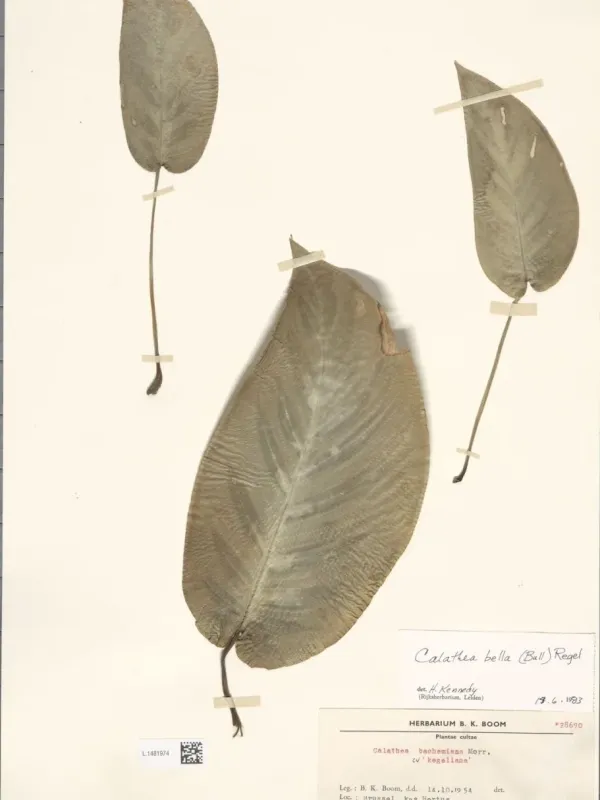
Description
Growing requirements
Calathea bella is a perennial herb belonging to the Marantaceae family. It originates from the tropical rainforests of Brazil, where it thrives in the shady, humid environment of the understory, sheltered from direct harsh sunlight.
To cultivate this plant successfully, one must maintain an ambient temperature between 18 and 24 degrees Celsius. It is crucial to avoid cold drafts and sudden temperature fluctuations, as these can severely stress the plant and damage its foliage.
The plant requires high humidity levels, ideally around 70-80 percent, to mimic its natural habitat. Regular misting with distilled water or the use of a room humidifier is recommended to prevent leaf edges from drying out and turning brown.
The potting substrate must be well-draining, airy, and slightly acidic. A mixture containing peat, perlite, and pine bark provides the necessary structure to support the delicate root system while ensuring adequate aeration.
In terms of light, Calathea bella prefers bright, indirect light. Direct sunlight is harmful and will cause the intricate patterns on the leaves to fade and potentially cause permanent scorch marks on the leaf surfaces.
Main diseases and pests
The most common pest affecting Calathea bella is the spider mite, which thrives in warm, dry indoor conditions. Infestations typically appear as fine webbing between the stems and leaves, eventually leading to yellowing of the foliage.
Mealybugs and scale insects may also infest the plant, feeding on sap and weakening its overall structure. Routine inspections of the undersides of the leaves are essential to catch and treat these pests at the earliest stages of infestation.
Root rot is a major threat often caused by overwatering or poor drainage. When the soil remains waterlogged for extended periods, the roots are deprived of oxygen, leading to rapid decay that can kill the plant if not addressed immediately.
Fungal leaf spot diseases can develop if air circulation is insufficient or if moisture remains on the leaves for too long. Maintaining a clean environment and avoiding getting water into the leaf crowns are vital preventive measures.
Managing the health of the plant involves a balanced care approach. If a serious infection or infestation occurs, isolating the affected specimen and using appropriate horticultural soaps or fungicides is the recommended strategy for recovery.