
Saffron crocus-flowered calathea
Calathea crocata
Description
Growing requirements
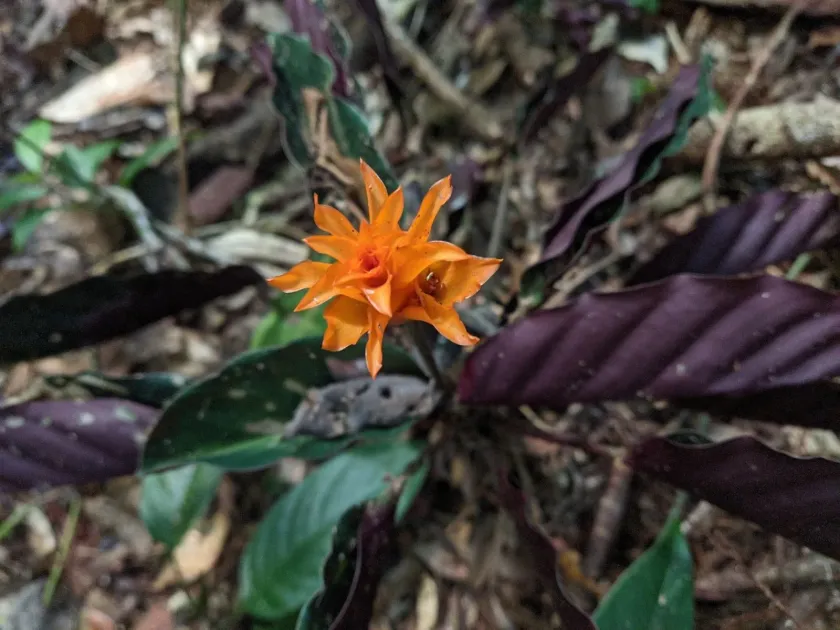
Saffron-flowered calathea (Calathea crocata) is a prominent member of the Marantaceae family. Native to the Brazilian rainforests, this perennial herb is prized for its unique orange-yellow inflorescences that resemble flames, rising above its dark green foliage.
The culture requires a consistent ambient temperature between 18°C and 25°C. It is highly sensitive to cold drafts and rapid temperature fluctuations, which can trigger leaf yellowing and structural damage to the cellular integrity of the plant.
Optimal soil conditions necessitate a well-draining, nutrient-rich, and slightly acidic medium. A blend of peat moss, pine bark, and perlite ensures adequate aeration, which is essential to prevent the suffocation of the delicate root system.
High relative humidity, ideally above 60%, is a strict requirement for successful development. In artificial environments, frequent misting or the use of automated humidification systems is necessary to mimic the natural tropical habitat.
Regarding light, this culture prefers bright, indirect sunlight. While it can survive in lower light conditions, consistent flowering is only achieved when the plant receives optimal light intensity without the stress of direct solar exposure.
Main diseases and pests
Spider mites are the most common pests affecting Calathea crocata. These arachnids thrive in low-humidity environments and pierce the leaf epidermis, leading to stippling and eventual leaf drop if left uncontrolled by acaricides.
Mealybugs represent a significant threat to the plant's health, often congregating in leaf axils. Physical removal combined with the application of horticultural oils or systemic insecticides is the standard protocol for containment.
Fungal pathogens, particularly Fusarium and Rhizoctonia, pose a risk when soil drainage is poor. These fungi attack the root zone, leading to wilting and systemic decay that is often irreversible in advanced stages of infection.
Thrips can also infest the canopy, causing silvering of the leaves and stunted growth. Integrated pest management strategies, involving biological controls such as predatory mites, are increasingly preferred in professional nursery settings.
Proactive plant health monitoring is vital. Ensuring proper spacing between plants improves airflow and reduces the probability of rapid disease transmission, thereby maintaining a healthy crop throughout the growth cycle.