
Pinstripe plant
Calathea ornata
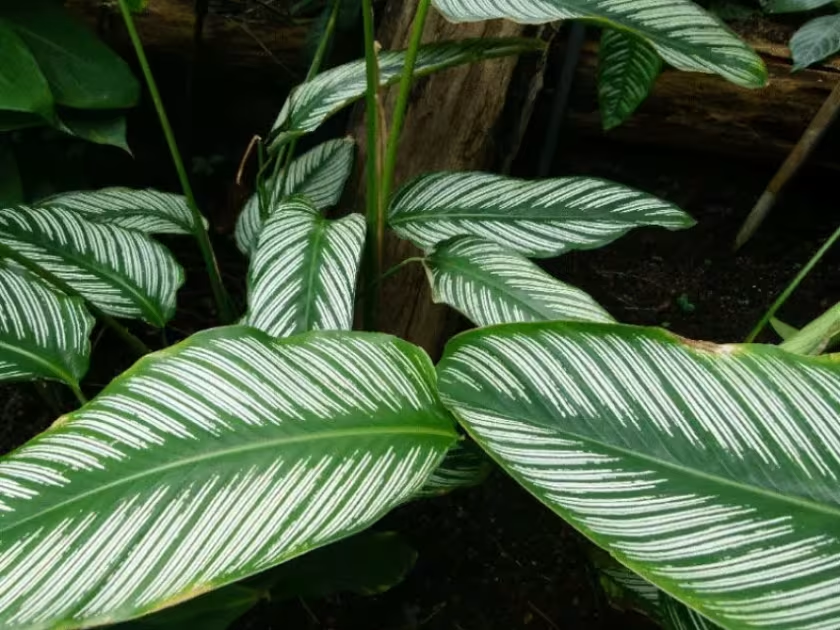
Description
Growing requirements
The Pinstripe plant (Calathea ornata) is a perennial herbaceous plant belonging to the Marantaceae family. It originates from the tropical forests of South America, specifically Colombia and Venezuela, where it grows in the understory of dense jungles.
This species requires high ambient humidity, ideally above 60-70%. Indoor environments often suffer from low humidity, so growers should use humidifiers, pebble trays, or regular misting to mimic the plant's natural rainforest habitat.
The ideal potting medium should be well-draining, airy, and slightly acidic. A mix containing peat moss, perlite, and bark is highly recommended to provide structure and moisture retention without risking root rot.
Temperature requirements remain within the range of 20°C to 25°C (68°F to 77°F). The plant is very sensitive to cold drafts and rapid temperature fluctuations, which can cause significant stress or foliage damage.
Lighting should be bright, indirect sunlight. While the plant can tolerate lower light, the vibrant pink or white pinstripe patterns on its leaves will fade if the light exposure is too poor. Avoid direct sun, as it quickly scorches the leaves.
Main diseases and pests
Spider mites are the most notorious pest for Calathea ornata, thriving in dry indoor air. They feed on the underside of the leaves, causing stippling, discoloration, and a loss of overall plant vigor.
Fungal diseases, particularly root rot, are common when the substrate remains overly wet or poorly aerated. Symptoms often include yellowing leaves, mushy stems, and a general decline in the plant's health.
Other potential pests include mealybugs and scale insects. These should be managed through manual removal with cotton swabs dipped in alcohol or by applying appropriate systemic insecticides if the infestation is severe.
Prevention is the best strategy against threats: keep the foliage clean by wiping it with a damp cloth, isolate new plants before introducing them to the collection, and ensure good air circulation around the base.
Excessive salinity from tap water or fertilizer buildup can also cause leaf edge necrosis. Using distilled water or rainwater is highly beneficial to prevent chemical burn and maintain the integrity of the foliage margins.