
Calathea hybrid
Calathea hybrids
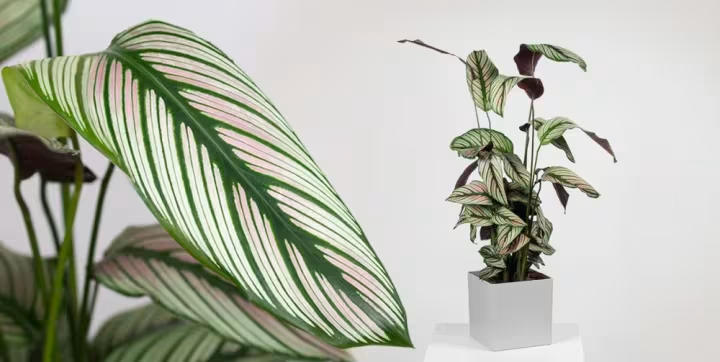
Description
Growing requirements
Calathea hybrid belongs to the Marantaceae family. These plants are widely recognized for their elaborate, patterned foliage which makes them highly valued as ornamental crops for interior landscaping and specialized horticulture.
Originating from the tropical rainforests of the Americas, this species is well-adapted to high humidity environments. Successful production requires an environment that mimics its natural habitat with consistent temperatures.
The agronomic management of this crop involves providing bright but indirect light. Excessive sunlight causes leaf bleaching and reduces the commercial viability of the plant, while insufficient light stunts growth.
Soil requirements for Calathea involve the use of a well-draining, slightly acidic peat-based substrate. The growing medium must allow for aeration while maintaining enough moisture to support healthy root development.
Commercial production of Calathea hybrids is typically focused on wholesale nursery cultivation. Producers utilize division or tissue culture techniques to ensure uniform growth and to maintain the stability of hybrid characteristics.
Main diseases and pests
Spider mites represent a significant threat to Calathea crops, especially during winter months when indoor heating causes humidity levels to drop drastically.
Root rot caused by Pythium and Phytophthora species is a common pathological issue arising from over-irrigation or poorly drained soil substrates.
Scale insects can infest stems and the undersides of leaves, requiring immediate manual removal or the application of horticultural oils for control.
Leaf spot diseases often occur due to poor air circulation and water droplets lingering on foliage for too long, promoting fungal pathogen growth.
Effective management includes integrated pest control strategies, careful water monitoring, and maintaining proper plant spacing to ensure adequate airflow around the foliage.