
Calanthe tricarinata
Calanthe tricarinata
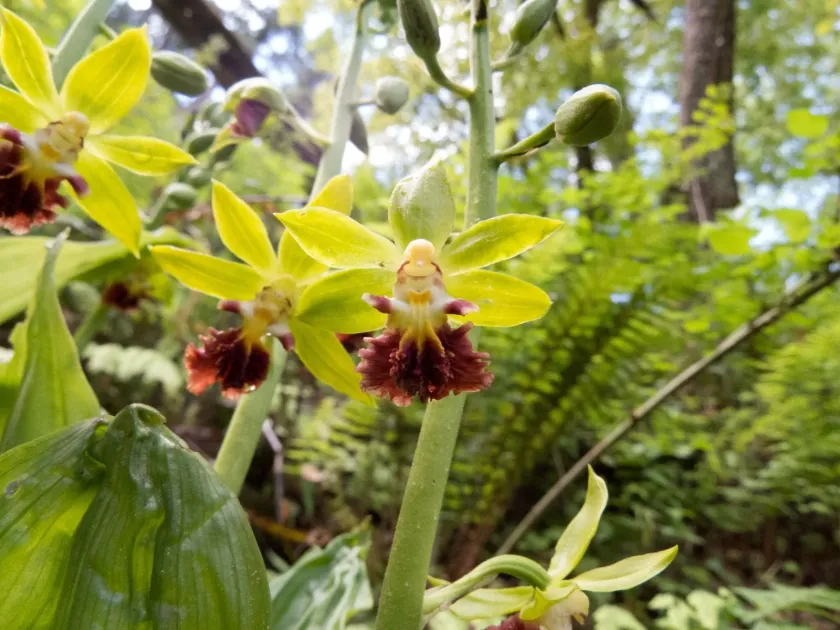
Description
Growing requirements
Calanthe tricarinata is a terrestrial orchid species belonging to the Orchidaceae family. It is native to the temperate forest regions of East Asia, including China, Japan, and the Himalayas, where it thrives in shaded, nutrient-rich soil environments.
The cultivation of this orchid requires specific attention to its root system, which is sensitive to poor drainage. A loose, airy substrate composed of pine bark, perlite, and decomposed organic matter is essential to ensure healthy growth and prevent root suffocation.
Environmental conditions should mimic the forest floor habitat. The plant requires moderate temperatures, ideally between 15 and 22 degrees Celsius. It is vital to protect the foliage from direct noon sun, as it can cause rapid dehydration and leaf spotting.
Irrigation practices must be precise; the growing medium should be kept consistently moist but never waterlogged. During the dormant winter phase, the plant requires significantly less moisture to prevent the pseudobulbs from rotting due to cold, wet conditions.
In terms of agricultural use, Calanthe tricarinata is valued primarily for its ornamental characteristics. It is an excellent specimen for cold-house cultivation and is frequently used in specialty orchid collections and horticultural research focusing on temperate forest flora.
Main diseases and pests
The primary pests affecting this species include spider mites and scale insects, which often colonize the plant when air circulation is insufficient. Regular monitoring and physical removal or appropriate insecticide treatments are recommended.
Botrytis and various fungal rots are the most common diseases that threaten Calanthe tricarinata. These are typically associated with high humidity combined with poor air movement, necessitating the use of fungicides and improved greenhouse ventilation.