
Billbergia viridiflora
Billbergia viridiflora
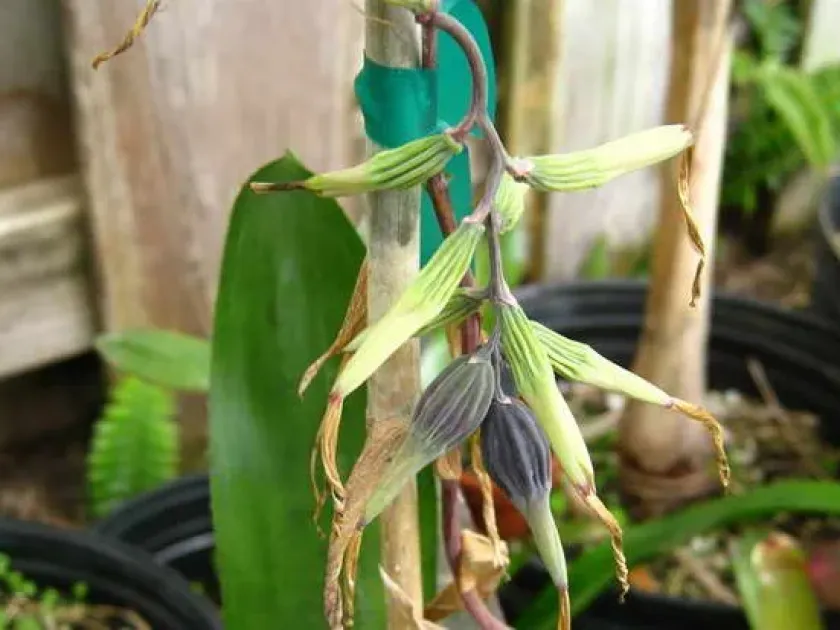
Description
Growing requirements
Billbergia viridiflora is a distinct species within the Bromeliaceae family, native to the tropical rainforests of Central America. As an epiphyte, it naturally grows on tree branches, deriving moisture and nutrients from the air and decaying debris.
Cultivation of this species requires a warm and stable environment, ideally maintaining temperatures between 20°C and 25°C. It is intolerant of frost and cold drafts, making it suitable mainly for greenhouses, conservatories, or climate-controlled interior spaces.
The substrate must be highly porous and well-draining to prevent root asphyxiation. A mixture consisting of orchid bark, peat moss, charcoal, and perlite provides the necessary structure and aeration required for the healthy development of the root system.
Bright, filtered light is essential for optimal growth and flowering. While it enjoys high light intensity, direct sun exposure during midday should be avoided to prevent the leaves from bleaching or developing necrotic lesions.
The watering technique is unique to bromeliads, involving regular filling of the central tank (rosette) with clean, room-temperature water. The potting medium should remain barely moist but never waterlogged to ensure the health of the basal leaves.
Main diseases and pests
Scale insects are common pests for this culture. These sap-sucking insects attach themselves to the leaves, appearing as small brown bumps, which significantly weaken the plant if left unchecked by systemic treatments.
Spider mites can proliferate rapidly if the ambient air remains dry for extended periods. Their presence is marked by fine webbing and a stippled appearance on the leaf surfaces, necessitating an increase in humidity and potential miticide application.
Mealybugs present a significant threat, often colonizing the tight crevices between leaves. Their white, waxy secretion is easily visible, and they can cause stunted growth and yellowing of the foliage if not manually removed.
Root and crown rot are the primary pathological threats, usually caused by poor drainage or overwatering. Once rot sets in, it spreads rapidly through the rosette, often requiring immediate propagation of healthy offsets to save the plant.
Maintaining a clean, ventilated environment is the best defense against pests and diseases. Regularly wiping leaves with a damp cloth prevents dust accumulation and allows the plant to photosynthesize efficiently while keeping potential infestation sites exposed.