
Billbergia chlorantha
Billbergia chlorantha
Description
Growing requirements
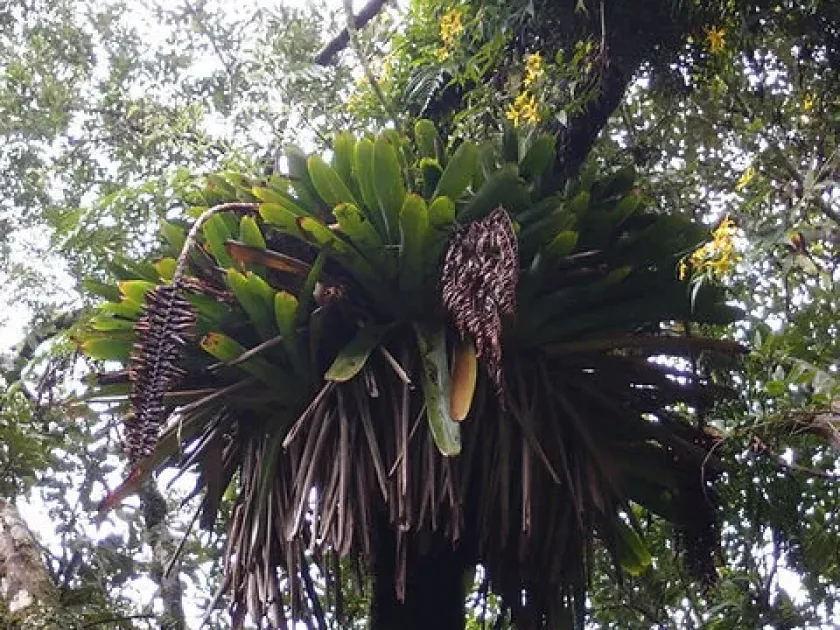
Billbergia chlorantha is a perennial epiphytic plant belonging to the Bromeliaceae family. Native to the tropical forests of Brazil, this species typically grows on tree trunks or rocks, obtaining nutrients from organic debris collected in its central rosette.
In cultivation, this plant thrives under bright, indirect light conditions. Direct sunlight should be avoided to prevent leaf scorch, making it an excellent choice for well-lit interior spaces away from windows with harsh midday sun.
The ideal temperature for active growth ranges between 20 and 25 degrees Celsius. During the winter, it is recommended to keep the environment slightly cooler, around 16 degrees, to simulate the natural dormant period required for blooming.
The potting medium must be exceptionally well-draining, similar to those used for orchids. A mixture of pine bark, peat moss, and perlite provides the aeration necessary for the epiphytic roots to avoid suffocation.
Watering is unique for this genus; water should be poured directly into the central cup formed by the leaves. It is essential to use soft, room-temperature water and keep the cup clean to prevent the buildup of bacteria.
Main diseases and pests
The primary threat to the plant is waterlogging the potting medium, which causes root rot. Maintaining a proper balance between hydration of the rosette and dryness of the soil is critical for plant health.
Scale insects are a common pest for Billbergia species. These pests attach to the undersides of leaves and stems, requiring immediate manual removal or the application of horticultural oils for effective control.
Spider mites can become a problem if the indoor air becomes too dry, especially during winter months. Regular misting and maintaining optimal humidity levels are key strategies for prevention.
Mealybugs often infest the tight spaces at the base of the rosette. Monitoring these areas frequently allows for early detection, which makes control much easier through localized insecticide treatment.
Fungal leaf spot diseases occur when there is poor air circulation and excessive moisture. Improving ventilation and ensuring the rosette is not sitting in stagnant, contaminated water are essential cultural practices.