
Billbergia brasiliensis
Billbergia brasiliensis
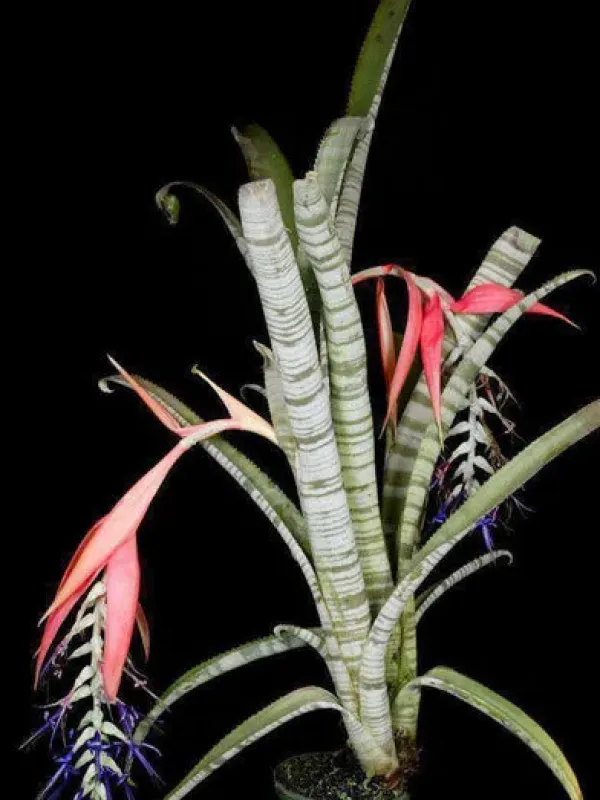
Description
Growing requirements
Billbergia brasiliensis is a species belonging to the Bromeliaceae family, native to the tropical rainforests of Brazil. As a member of this diverse family, it exhibits unique morphological traits that allow it to thrive in humid, shaded environments.
The plant is characterized by a tank-like rosette of stiff, leathery leaves. This structure is biologically adapted to collect rainwater and decaying organic matter, which the plant utilizes as a primary source of nutrients in its natural habitat.
To cultivate this species successfully, one must maintain temperatures between 18°C and 26°C. While it is somewhat tolerant of minor temperature fluctuations, consistent warmth is required to support its metabolic processes throughout the growing season.
Soil requirements for this bromeliad involve a coarse, well-draining substrate. A typical mix includes orchid bark, perlite, and peat moss to ensure that the root system receives adequate aeration while preventing waterlogging, which is critical for preventing root rot.
Lighting should be bright but filtered. Intense midday sun can cause chlorophyll damage and leaf scorch. Regular watering in the central rosette, along with maintaining high ambient humidity, mimics the natural conditions of the Brazilian forest canopy.
Main diseases and pests
The most significant threat to Billbergia brasiliensis is improper irrigation management. Overwatering the growing medium quickly leads to fungal infections and systemic root death, which are often irreversible once fully established.
Scale insects represent a major pest risk. These insects often hide in the tight crevices between leaves, making them difficult to detect. They cause stunted growth and yellowing by feeding on the plant's vascular sap.
Mealybugs can also infest the plant, particularly in sheltered areas of the rosette. Their presence is marked by white, cottony secretions that can spread rapidly if left untreated, requiring manual removal or systemic treatments.
Spider mites are common in environments with low humidity. They weaken the plant by extracting cell contents, resulting in a stippled appearance on the leaves. Increasing air humidity effectively prevents most mite-related issues.
Cultural prevention remains the primary line of defense. Ensuring proper airflow and avoiding water stagnation in the growing container creates an environment where pests and diseases find it difficult to colonize the host plant.