
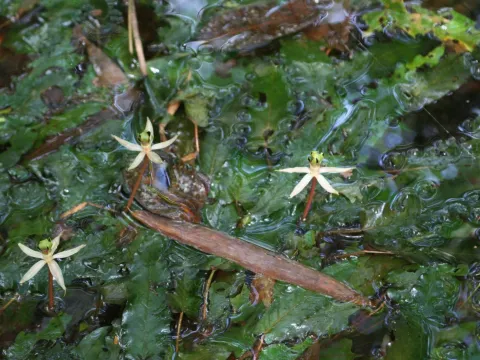
Barclaya
Barclaya
Barclaya is a genus of rare aquatic plants belonging to the family Nymphaeaceae. These plants are native to the tropical regions of Southeast Asia, thriving primarily in slow-moving or stagnant tropical waterways.
What the section contains


Barclaya
The plant features a rosette of leaves that can take on various shapes, from lanceolate to cordate, depending on the specific species. It is famous for its unique flowering process, which can occur both above and below the water surface, a crucial adaptation for flood-prone habitats.
Optimal growth requires a stable water temperature between 24 and 28 degrees Celsius. Barclaya is known for its sensitivity, and sudden environmental changes may cause the plant to shed its leaves or enter a dormant state.
The planting medium should be rich in organic matter and nutrients, as Barclaya relies heavily on its root system for growth. A substrate composed of clay, peat, and fine gravel is recommended to ensure both nutrient availability and root aeration.
Light requirements for this plant are moderate, as it prefers diffused light rather than intense direct radiation. A photoperiod of approximately 10 to 12 hours is ideal to maintain healthy leaf development and flowering.
Environmental instability, particularly shifts in water hardness and pH levels, is the primary threat to the health of Barclaya. Such stressors often lead to root rot or total plant collapse if not managed promptly.
Excessive algae growth is another common issue that threatens these plants by blocking essential light. Maintaining a clean water environment and managing nutrient levels helps prevent algae outbreaks.
Pests, such as freshwater snails, are known to consume the soft leaves of the plant. Monitoring and managing these populations is necessary to prevent significant aesthetic and structural damage to the foliage.
Fungal infections of the rhizome can occur if the substrate becomes compacted and anaerobic. Ensuring proper water circulation around the root zone helps mitigate these risks significantly.
Nutrient deficiencies, specifically iron, cause chlorosis, where leaves lose their color and eventually turn necrotic. Utilizing specialized root fertilizer tablets is the most effective way to address these nutritional needs.