
Barclaya motleyi
Barclaya motleyi
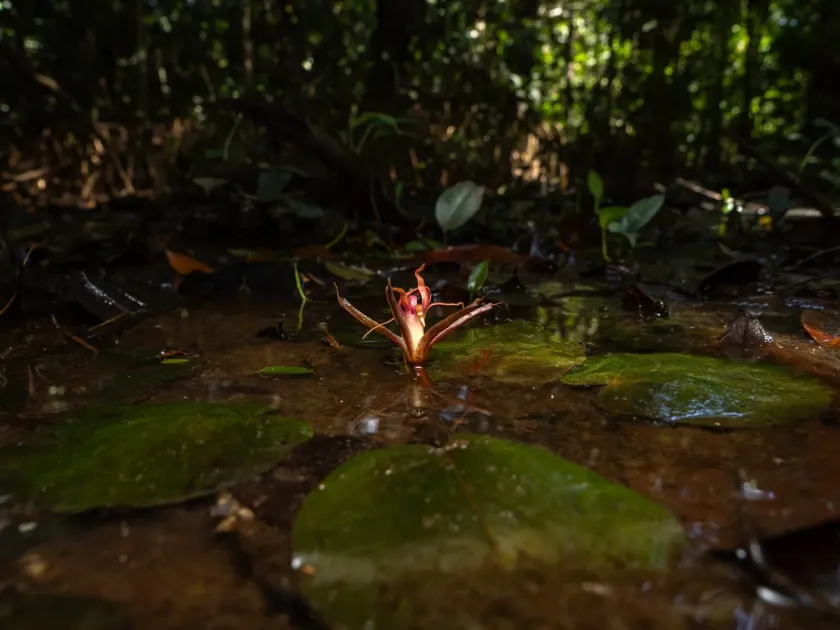
Description
Sowing dates
Propagation of Barclaya motleyi is primarily conducted through seed germination, which requires precise conditions to ensure high viability rates.
Seeds should be sown immediately after harvesting into a substrate consisting of fine peat mixed with clay to provide the necessary nutrients for the initial growth stage.
Temperature during the germination phase must be kept between 25 and 28 degrees Celsius, ensuring constant moisture levels in the surrounding environment.
Maintaining a shallow water level is critical until the plantlets develop their first true leaves, which usually takes several weeks of stable care.
Once the root system is established, seedlings can be transplanted into more spacious containers with enriched soil to facilitate rapid development.
Growing requirements
Barclaya motleyi is a unique aquatic species within the Nymphaeaceae family, native to the shaded forest streams of Southeast Asia, particularly Malaysia and Indonesia.
The plant requires soft to medium-hard water with a slightly acidic pH, mirroring the conditions of its natural tropical swamp and stream environments.
Soil requirements involve a nutrient-rich substrate, preferably with a high humus content and iron additives, to support the growth of its distinctive, fleshy rhizomes.
Climate control is essential; as a tropical species, it cannot tolerate temperatures below 20 degrees Celsius or sudden fluctuations in environmental parameters.
Light intensity should be kept low to moderate, as the species is adapted to grow under the forest canopy and is sensitive to intense direct sunlight.
Yield
While not a traditional agricultural commodity, the yield of this plant in commercial nurseries is measured by the number of healthy plantlets produced per mother plant.
Under optimal greenhouse conditions, a single well-developed rhizome can produce several offshoots over the course of a single growing season.
Effective biomass production depends on the quality of light and the delivery of CO2, which are the primary limiting factors in controlled environments.
Regular harvesting of mature leaves can be performed, provided the core plant remains undisturbed to ensure continuous vegetative growth throughout the year.
Commercial value is derived from the ornamental appeal of the plant, specifically the coloration of the leaves which varies depending on the light intensity provided.
Main diseases and pests
Root rot caused by anaerobic bacteria is the most prevalent threat, often resulting from poorly aerated substrate or excessive organic decomposition in the water.
Algal blooms on the leaf surface act as a major stressor, blocking photosynthetic capacity and eventually leading to the death of the leaf tissue.
Invertebrates such as certain species of freshwater snails are known to graze on the succulent foliage of the plant, causing significant aesthetic and structural damage.
Fungal infections frequently manifest when the plant experiences prolonged physiological stress, often triggered by unstable water parameters or low mineral levels.
Nutrient deficiencies, particularly regarding nitrogen and iron, result in chlorosis, a condition that significantly weakens the plant and stunts its overall growth.