
Long-leaf Barclaya
Barclaya longifolia
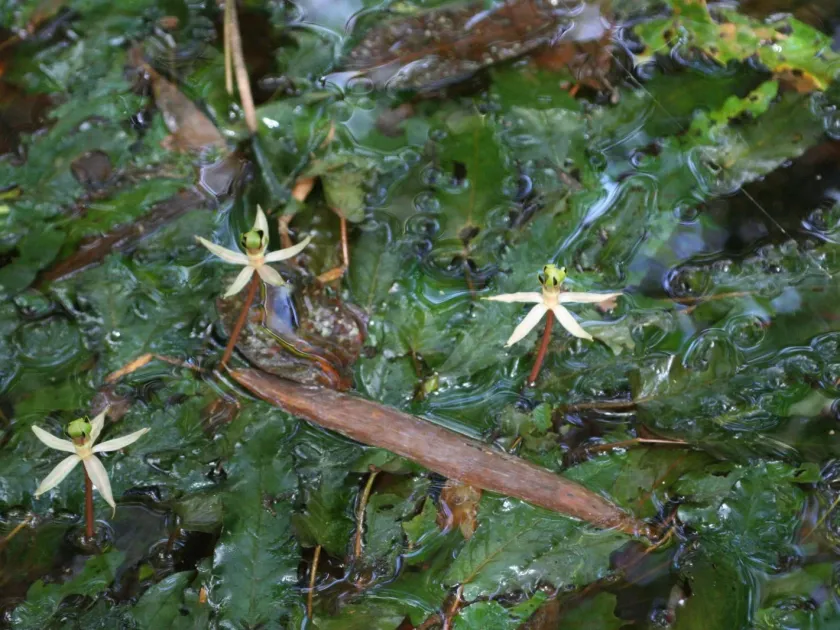
Description
Growing requirements
Barclaya longifolia belongs to the Nymphaeaceae family. It is a highly valued aquatic plant native to the tropical regions of Southeast Asia, often found in slow-moving streams and ponds.
The plant requires stable tropical temperatures between 24 and 28 degrees Celsius. Any significant drops in temperature can cause the plant to enter an unwanted dormancy phase or lead to leaf decay.
The substrate must be nutrient-rich and porous. A mix of clay, fine sand, and some peat is recommended to provide the necessary minerals for the development of the tuberous root system.
Water chemistry should be maintained with low carbonate hardness and a slightly acidic pH level, typically between 6.0 and 7.0. Maintaining these parameters ensures the plant remains vibrant.
Lighting should be moderate to bright but indirect. Proper light intensity is essential for maintaining the characteristic coloration of the leaves, which can range from green to deep bronze-red.
Main diseases and pests
Root rot is the most serious threat, usually caused by poor substrate circulation or excessive organic decay in the sediment. This leads to the softening and death of the main tuber.
Aquatic pests, such as snails, can be a nuisance by feeding on the tender, new leaves. Keeping pest populations in check is vital for the visual appeal of the plant.
Fungal infections can occur if the plant is stressed by frequent changes in water parameters. Such infections often manifest as dark, mushy spots on the leaf surface.
Nutrient deficiencies, particularly iron, often cause chlorosis. If the leaves start to yellow, immediate intervention with root-zone supplementation is necessary to prevent further decline.
Maintaining biological balance in the water column is the best defense against disease. Preventing the buildup of heavy organic waste helps keep the plant robust and resistant to pathogens.