
Vandaenopsis
x Vandaenopsis spp.
Description
Growing requirements
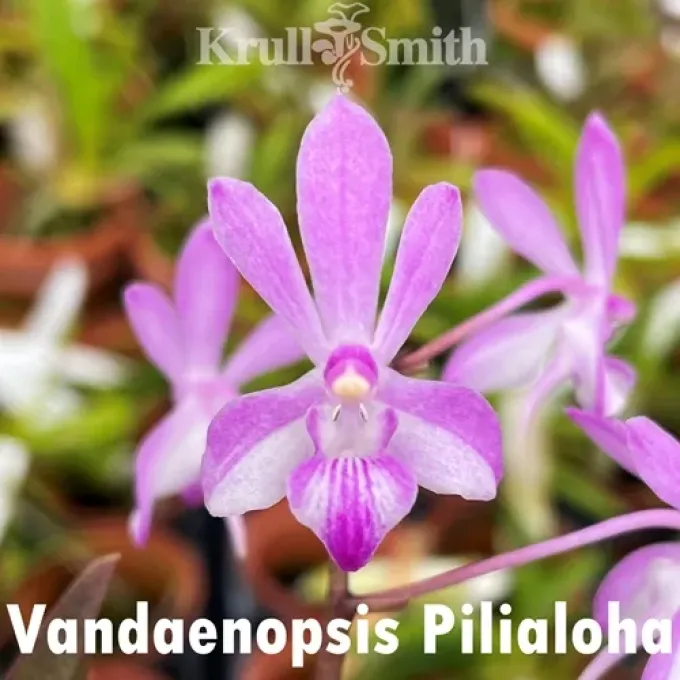
Vandaenopsis is an intergeneric hybrid orchid resulting from the cross-breeding of the Vanda and Phalaenopsis genera. Belonging to the Orchidaceae family, it combines the structural beauty of the Phalaenopsis with the vibrant, bold color palettes typical of Vanda orchids.
As an epiphytic culture, it requires specialized growing conditions that mimic its native tropical environment. The root system must have access to significant airflow, making chunky bark or specialized baskets the preferred growing medium for these plants.
Environmental management is critical, with an ideal temperature range of 20°C to 28°C. Consistent thermal conditions are necessary to maintain healthy growth, as sudden fluctuations often cause the plant to drop its flower buds prematurely.
High humidity levels, typically between 60% and 75%, are essential for the plant to thrive. In indoor settings, growers often utilize ultrasonic humidifiers or humidity trays to ensure the leaf tissue remains firm and free from dehydration stress.
Light intensity should be high but diffused. While these hybrids love bright conditions, they are susceptible to leaf scorch if exposed to direct, unfiltered sunlight during the midday hours, necessitating the use of light-filtering shades or curtains.
Main diseases and pests
Spider mites and mealybugs are the most prevalent pests affecting Vandaenopsis. These insects often target the plant when ambient humidity is too low, requiring vigilant monitoring of the leaf axils and the undersides of the leaves.
Fungal pathogens such as Pythium and Phytophthora often lead to root rot if the substrate stays saturated for too long. Proper drainage and aeration are the primary defense mechanisms against these soil-borne diseases.
Bacterial soft rot can occur if water becomes trapped within the plant's crown or leaf axils after irrigation. If soft, watery lesions appear, the affected areas must be removed with a sterilized blade and treated with appropriate bactericides.
Nutrient toxicity, manifesting as yellowing tips or darkened roots, occurs when excess fertilizer salts accumulate in the potting media. Monthly flushing of the substrate with clean, distilled water is recommended to remove mineral build-up.
Vigilance against viral infections is mandatory, as there is no cure for orchid viruses. Keeping tools sterilized using high-heat or chemical agents when pruning or repotting is the most effective way to prevent the spread of infections between plants.