
Barclaya rotundifolia
Barclaya rotundifolia
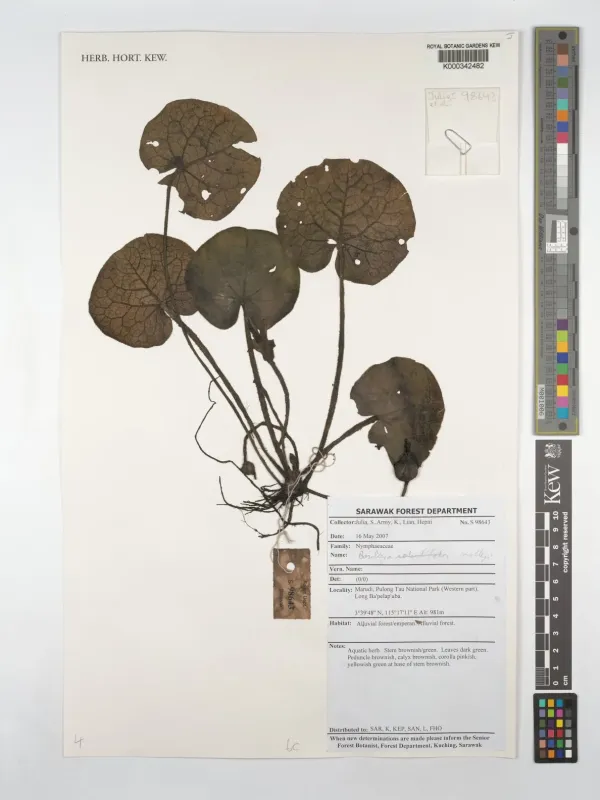
Description
Growing requirements
Barclaya rotundifolia is a rare species of aquatic plant belonging to the Nymphaeaceae family. Known for its distinctively round leaves and rosette growth pattern, it serves as a sophisticated addition to botanical collections and specialized aquarium environments.
Originating from the tropical waterways of Southeast Asia, this species thrives in environments characterized by slow-moving or stagnant water bodies with rich, silty substrates. Its native habitat provides the nutrient-dense foundation necessary for its relatively slow but steady growth cycle.
Cultivation requirements involve maintaining a warm, stable aquatic environment with water temperatures consistently between 24 and 28 degrees Celsius. Moderate lighting is essential to prevent the excessive proliferation of algae, which can easily overgrow and smother the delicate leaves of the plant.
Soil quality is paramount for the successful development of this culture. The substrate must be nutrient-rich, acidic to neutral in pH, and composed of fine particles that allow for easy root penetration while ensuring the plant remains firmly anchored in the bottom layer.
Agricultural techniques for this species focus on minimal disturbance. Because the plant is sensitive to changes in water chemistry, routine maintenance must include precise nutrient dosing and careful monitoring of nitrogen levels to avoid chemical stress or sudden leaf degradation.
Main diseases and pests
The primary threats to Barclaya rotundifolia include fungal rot caused by poor circulation within the substrate and competitive pressure from aggressive algae species. Maintaining a balanced ecological environment and ensuring adequate oxygen levels in the root zone are critical to mitigating these common agricultural risks.