
Rose Glorybower
Clerodendrum bungei Steud.
Description
Growing requirements
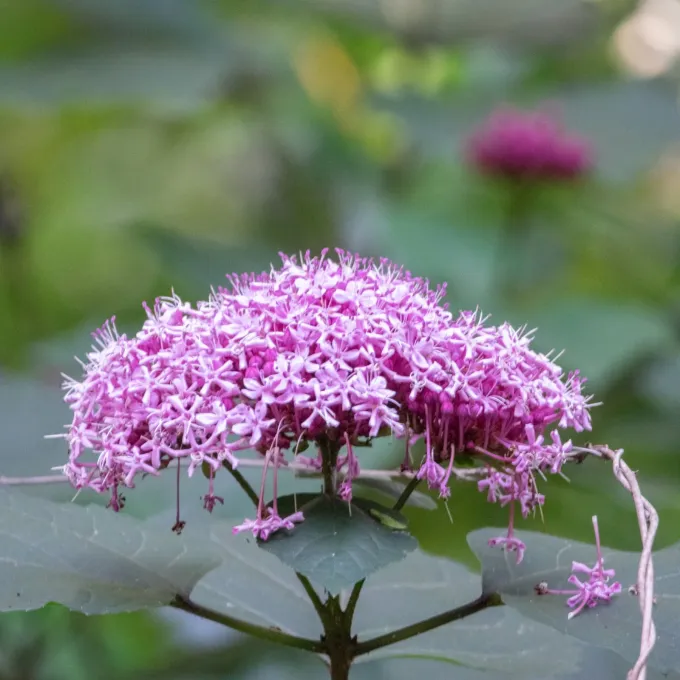
The Rose Glorybower (Clerodendrum bungei) is a deciduous shrub belonging to the Lamiaceae family, originating from China. It is highly valued in horticulture for its spectacular, fragrant, deep pink flower clusters that bloom during late summer and autumn.
This species thrives in warm, temperate climates and requires a sheltered position in full sun to partial shade. Due to its limited frost tolerance, it is often grown in containers or in sheltered garden spots with heavy winter mulching.
The ideal soil for this plant is nutrient-rich, well-draining, and consistently moist. It prefers slightly acidic to neutral soil conditions, which support its vigorous vegetative growth and prevent nutritional deficiencies.
Cultural practices involve regular irrigation during the peak growing season, as the large leaves lead to high transpiration rates. Fertilizing with a balanced liquid fertilizer during the blooming period enhances the intensity and duration of the flowers.
In landscaping, it is used for its exotic appearance and aromatic qualities. It works best in mixed borders where its height and striking flowers can act as a visual focal point during the late season when other plants begin to fade.
Main diseases and pests
The most common pests affecting this plant are spider mites and whiteflies, which tend to infest leaves during hot and dry spells. Regular misting and the use of insecticidal soaps are recommended for control.
Root rot is the primary physiological risk, typically caused by overwatering or poor drainage. Ensuring that the soil structure is airy and porous is the most effective way to protect the plant from fungal decay.