
Common milkweed
Asclepias syriaca L.
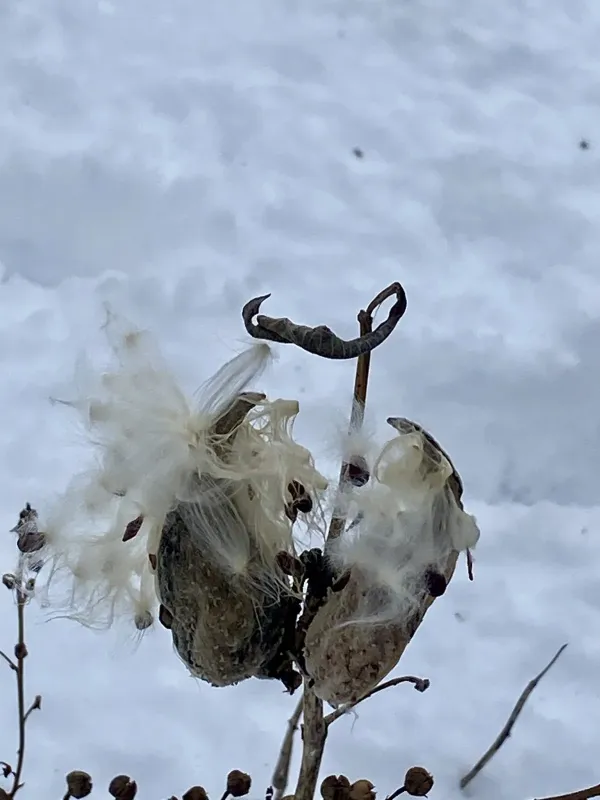
Description
Sowing dates
The planting of common milkweed is primarily carried out in the spring when the soil temperature reaches 10–12 degrees Celsius at the seeding depth.
The optimal time is between late April and mid-May, allowing the seeds to take advantage of post-winter soil moisture for uniform germination.
Seeds should be sown in rows spaced 60 to 70 centimeters apart, providing enough space for each plant due to their extensive root system.
The sowing depth is 2–3 centimeters, depending on soil texture and moisture levels, to prevent the risk of the topsoil drying out.
After emergence, it is recommended to thin the seedlings so that the distance between plants within the row is at least 30–40 centimeters.
Growing requirements
Common milkweed belongs to the Apocynaceae family and is a perennial herbaceous plant valued as a technical crop.
The crop has moderate climate requirements, as it is a drought-tolerant species capable of successful growth in continental climate conditions.
The best development rates are observed in light sandy loams and well-drained chernozem soils rich in organic matter and nutrients.
The plant is light-loving and does not tolerate shade, which is a critical factor when selecting a field for commercial cultivation.
During the first years of growth, weed control is essential because milkweed develops slowly during its initial vegetative stage.
Yield
The industrial use of common milkweed is aimed at obtaining high-quality bast fiber, which possesses properties similar to jute and flax.
The seeds contain a significant percentage of technical oils used in the paint and varnish industry for the production of various coatings.
The silk floss covering the seeds inside the pods has unique hygroscopic properties and is used as a buoyant filling for life jackets.
Common milkweed is a valuable late-summer nectar source, providing stable foraging conditions for bees when other crops have finished flowering.
The biomass of the stems, after processing, can be utilized in the production of high-quality cardboard, paper, and other pulp products.
Main diseases and pests
The crop is generally considered resistant to diseases, although it can be affected by root rot of various etiologies under waterlogged conditions.
The most dangerous pest in Eurasia is the aphid, which colonizes the young tips of the stems and significantly reduces overall productivity.
If agronomic practices are neglected, rust outbreaks may occur on the plantings, requiring preventive fungicide treatments.
Milkweed can also suffer from certain types of weevils that damage the leaf blades, thereby slowing down the accumulation of vegetative mass.
Systematic field monitoring and crop rotation help to minimize the need for intensive application of chemical plant protection products.
Harvesting
Harvesting vegetative mass for the fiber industry is carried out during the full flowering phase, when the concentration of bast fibers reaches its peak.
Seed collection is performed during the pod-splitting phase using specialized harvesters to prevent the loss of light, wind-dispersed seeds.
Proper and timely drying of the harvested material is crucial, as high moisture levels in seeds or stems lead to rapid degradation of the raw product.
Nectar collection by bees lasts throughout the entire 30-40 day flowering period, which necessitates caution during any chemical treatments.
Following the harvest of the aerial parts, deep inter-row cultivation is required to control the spread of the root system for the following season.