
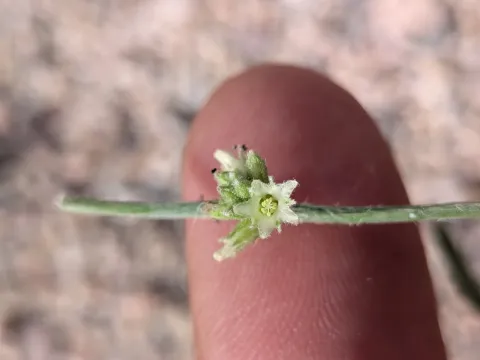
Argythamnia
Argythamnia
Argythamnia is a genus of plants belonging to the Euphorbiaceae family. These plants are typically found in tropical and subtropical regions of the Americas, thriving in diverse environmental settings ranging from arid deserts to open grasslands.
What the section contains

Argythamnia
The crop requires well-drained soil to thrive, preferring sandy or rocky substrates. Given its evolutionary adaptation to drier climates, water logging poses a significant risk to the plant's health, making drainage efficiency a priority in any cultivation site.
Full sun exposure is an absolute necessity for Argythamnia. The plants utilize intense solar radiation to drive their metabolic processes, and any significant reduction in light levels will negatively impact their growth rate and architectural integrity.
Climatic requirements are strictly centered around warm, frost-free environments. While some species exhibit resilience to extreme heat, they are not frost-hardy and will experience severe tissue damage if exposed to freezing temperatures for extended periods.
Agrotechnical practices should focus on maintaining a lean nutritional environment. The plant does not require high levels of nitrogen fertilization; rather, it performs best when treated similarly to native succulents or semi-arid scrub vegetation.
Root pathogens are the primary threat to the crop, particularly in poorly aerated or consistently damp soils. Fungal infections can develop rapidly, causing systemic collapse before visible symptoms appear on the foliage.
Insects such as aphids and spider mites are common pests that feed on the sap of the plant. These pests often congregate on the underside of leaves, and their feeding activity can significantly stress the plant, leading to stunted development.
Powdery mildew represents a foliage disease challenge that is often correlated with poor air circulation. Proper spacing between individual plants is essential to ensure that leaves can dry quickly after dew or rare rainfall events.
Weed management remains critical during the seedling stage. Since the plant is a slow grower initially, it cannot effectively compete with aggressive weeds for water and light, necessitating manual or mechanical intervention.
Integrated pest management (IPM) is the recommended approach for Argythamnia. Utilizing predatory mites for spider mite control and maintaining soil health through proper irrigation practices reduces the reliance on synthetic chemicals.