
Alluaud's Spurge
Euphorbia alluaudii
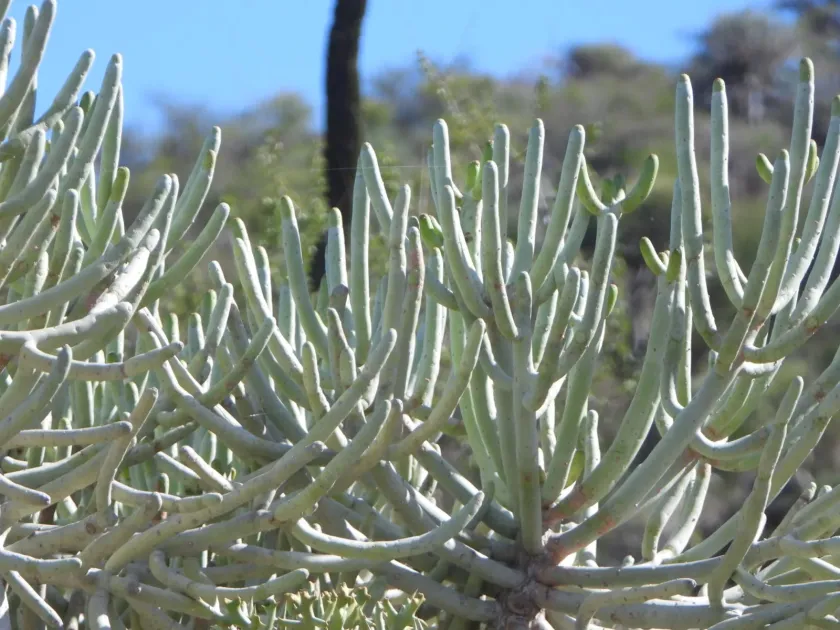
Description
Growing requirements
Alluaud's Spurge (Euphorbia alluaudii) is a perennial succulent plant native to Madagascar, belonging to the diverse Euphorbiaceae family. It is highly valued for its striking, leafless, and jointed green stems that create a unique architectural display in botanical collections.
The plant thrives in bright, direct sunlight throughout the year. Providing sufficient light intensity is critical for maintaining the plant's structural integrity and preventing etiolation, which results in weak and spindly growth that detracts from its ornamental value.
Cultivation requires a fast-draining, gritty soil mix. Gardeners should opt for commercial cactus or succulent potting soil, often amended with additional pumice or coarse sand to ensure superior drainage and prevent the risk of waterlogging in the root zone.
Optimal growth occurs at temperatures ranging between 20°C and 28°C during the active growing season. In the winter months, the plant benefits from a cool resting period with temperatures dropping slightly, which mirrors its natural environmental cycle.
Watering practices must be disciplined: the potting medium should be allowed to dry out completely between waterings. During winter, hydration should be significantly reduced to avoid physiological stress and potential root decay caused by prolonged moisture.
Main diseases and pests
The primary threat to this species is root rot caused by overwatering or poor drainage. Symptoms include darkening of the stems at the base and soft, mushy tissues, indicating that the vascular system has been compromised by pathogenic fungi.
Mealybugs are a frequent pest that targets the crevices between stem segments. These insects feed on plant sap and can cause stunted growth; they are identifiable by the white, cotton-like waxy secretions they produce on the surface of the plant.
Scale insects can also infest Alluaud's Spurge, appearing as small, brownish bumps on the stems. If left untreated, they can weaken the plant significantly, making it susceptible to secondary infections or environmental stress.
Spider mites, while less common than on other plants, may become an issue in environments with consistently low humidity. They typically manifest as fine webbing and stippling on the stem surface, requiring immediate intervention with insecticidal soaps or oils.
Effective management includes regular monitoring of the plant, especially the hidden parts of the stems. Maintaining good hygiene by removing dead segments and ensuring proper air circulation around the plant helps prevent most common health issues.