
Argyranthemum hybrids
Argyranthemum hybrids
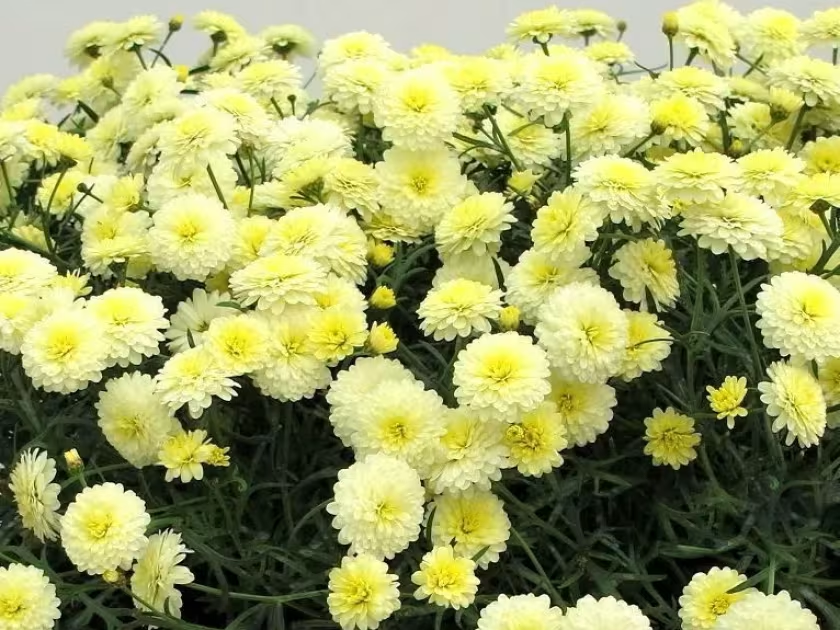
Description
Sowing dates
Argyranthemum hybrids are ornamental plants belonging to the Asteraceae family, valued for their abundant and long-lasting daisy-like flowers.
Originally native to the Canary Islands, these hybrids have been developed to thrive in various temperate climates as both container and garden plants.
Propagation is generally performed through stem cuttings to ensure the genetic uniformity and vigor of the hybrid varieties.
Planting outdoors should only occur once the danger of spring frost has completely passed, as these plants are sensitive to cold temperatures.
Starting the plants in a controlled greenhouse environment allows for early establishment before moving them to their permanent summer locations.
Growing requirements
This crop requires full sun exposure to produce the maximum number of blooms and maintain a compact, bushy habit.
The soil must be well-draining, as the root system is highly susceptible to rot if subjected to waterlogged conditions.
A fertile, loamy substrate with a neutral pH is considered ideal for supporting the rapid growth of these floral hybrids.
Regular irrigation is essential, especially during high-temperature periods, but it should be combined with good ventilation.
Frequent deadheading of spent flowers encourages the plant to put energy into new buds rather than seed production.
Main diseases and pests
Aphids are the most common pests that cluster on young shoots, potentially transmitting viruses and weakening the plant structure.
Powdery mildew is a frequent disease issue, especially in environments where humidity is high and air circulation is restricted.
Whiteflies can cause significant damage in greenhouse or nursery conditions if not managed with appropriate biological or chemical controls.
Root rot is a critical threat often caused by overwatering or compacted soil that prevents proper oxygen exchange at the roots.
Integrated pest management strategies are recommended to keep the plants healthy throughout the entire growing season.