
Anthurium warocqueanum
Anthurium warocqueanum
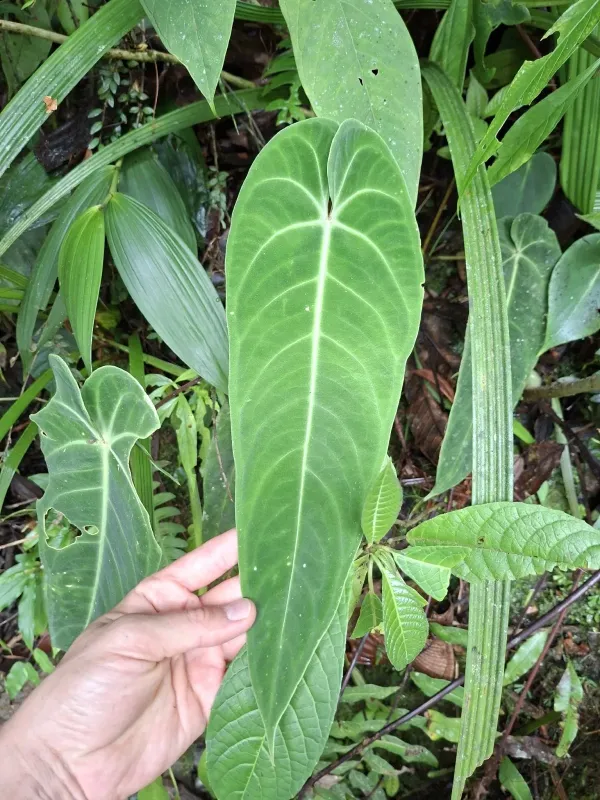
Description
Growing requirements
Anthurium warocqueanum, widely known as the Queen Anthurium, belongs to the Araceae family and is native to the rainforests of Colombia. It is highly sought after by horticulturists and collectors for its elongated, velvety leaves and striking venation.
The species requires a high-humidity environment, consistently maintained above 70%, to thrive. Greenhouse cultivation or highly controlled terrarium conditions are recommended, as the thin foliage is prone to desiccation in low-humidity domestic environments.
Temperature management is crucial, with an ideal range between 20°C and 26°C. It is essential to maintain stability, as temperature fluctuations can induce leaf necrosis and weaken the plant's overall metabolic processes.
The root system requires an exceptionally well-aerated, epiphytic-style substrate. A mixture comprising orchid bark, charcoal, perlite, and high-quality sphagnum moss is ideal for ensuring drainage while maintaining necessary moisture levels.
Light levels should be bright but strictly indirect to avoid scorching the delicate, velvet-textured leaf blades. Artificial lighting is frequently employed in professional settings to maintain uniform leaf color and promote steady growth throughout the year.
Main diseases and pests
Fungal pathogens, particularly root rot and leaf spot diseases, are the primary threats. These issues are almost exclusively linked to poor aeration and waterlogged substrate, necessitating the use of breathable pots and sterile growing media.
Pest management focuses on mitigating infestations of spider mites and mealybugs. Due to the susceptibility of the leaves to chemical burn, preventative biological control and careful application of horticultural oils are preferred methods of protection.