
Giant Anthurium
Anthurium giganteum
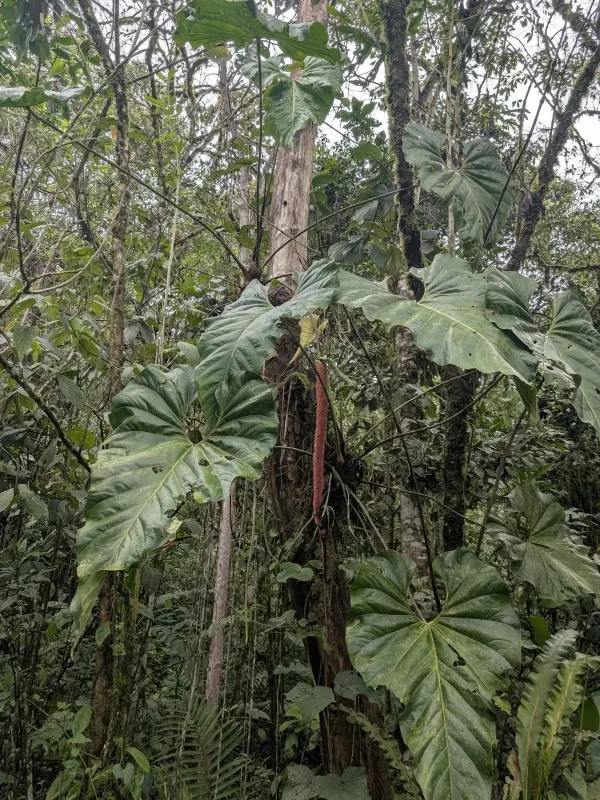
Description
Growing requirements
Anthurium giganteum, a prominent member of the Araceae family, is renowned for its massive, leathery foliage that serves as the primary ornamental feature of this species.
Originating from the tropical rainforests of Central and South America, the plant thrives in humid, shaded environments where it often grows epiphytically on trees.
The cultivation requirements focus on mimicking its natural habitat: high ambient humidity levels exceeding 70% and consistent temperatures between 22°C and 28°C are crucial.
A well-draining, coarse-textured potting medium is essential to prevent root asphyxiation, incorporating materials such as orchid bark, perlite, and premium peat moss.
Light levels should be carefully managed; while the plant requires bright light to maintain size, it must be filtered to avoid the scorched leaf tissue typical of direct sunlight exposure.
Main diseases and pests
Common pests encountered during cultivation include spider mites and mealybugs, which thrive in stagnant, dry indoor air conditions.
Root rot is the most significant pathological threat, usually precipitated by improper watering practices or heavy, compacted soil that fails to drain adequately.
Bacterial blight (Xanthomonas) can cause significant leaf damage, often characterized by yellowing margins and necrotic spotting across the plant's surface.
Integrated pest management strategies should include regular inspection of the underside of leaves and the application of mild horticultural oils when necessary.
To ensure long-term health, growers must prioritize environmental stability and ensure that air circulation is sufficient to prevent the accumulation of moisture on the foliage.